A Dermatologist's Guide To Living With Eczema In Singapore
What eczema actually is, why our climate makes it harder, the five pillars of daily control, and the overlooked one: what's in your shower water.

I've practised dermatology for over 20 years, and eczema is one of my subspecialty interests, alongside psoriasis and acne. A large part of my clinic week is spent with eczema patients, from infants to seniors, and the same questions come up again and again. This guide is my attempt to answer them properly, in one place, the way I would across the consultation table.
What Eczema Actually Is
Eczema (atopic dermatitis) is not "just dry skin", and it is not caused by poor hygiene. It is a chronic condition built on two things happening at once:
1. A leaky skin barrier. Healthy skin is like a brick wall: skin cells are the bricks, and lipids (fats) are the mortar holding everything together and sealing moisture in. In eczema, that mortar is deficient, in many patients because of variations in a gene called filaggrin. Water escapes too easily, and irritants, allergens, and microbes get in too easily.
2. An over-reactive immune response. When irritants get through the leaky barrier, the immune system overreacts, producing the redness, swelling, and above all the itch. Scratching damages the barrier further, which lets more irritants in, which drives more itch. We call this the itch-scratch cycle, and breaking it is half the battle.
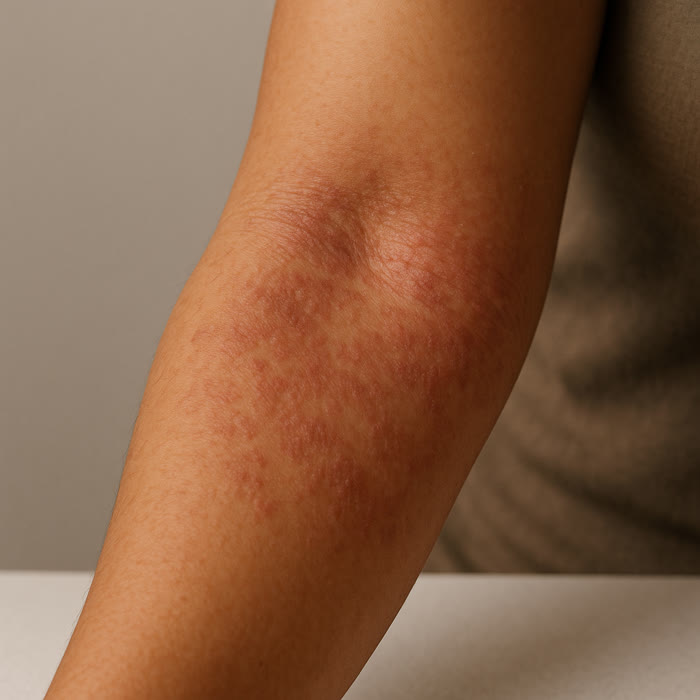
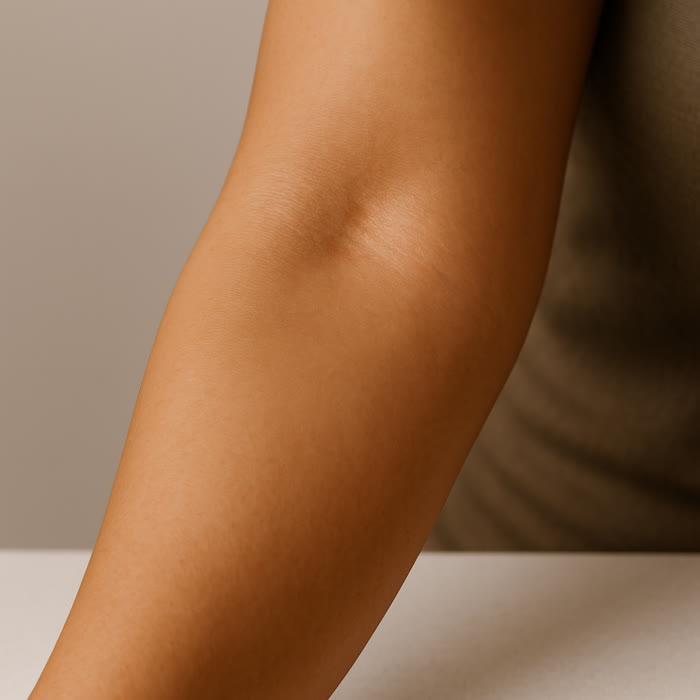
This matters because it tells you what treatment has to do: repair and protect the barrier, calm the immune response, and remove the daily irritants that keep setting the cycle off. Every recommendation in this guide serves one of those three jobs.
Why Singapore Is Hard Mode For Eczema
Singaporean children are affected by eczema1
of adults here live with it, well above global adult rates1
new eczema cases at the National Skin Centre in FY2023 alone2
Those numbers are not an accident. Our environment stacks several triggers on top of each other:
- Heat and humidity mean sweat sits on the skin for hours, and sweat is a potent eczema irritant.
- Air-conditioning then swings you the other way, into dry, moisture-stripping air, often several times a day.
- Frequent showering is a practical necessity here, but every shower is also a barrier-stress event: hot water, cleansers, and chlorinated water all remove lipids from the skin.
- Dust mites thrive in our humidity and are among the most common allergen triggers I see on testing.
You cannot change the climate. Which is exactly why the factors you can change, your shower habits, your water, your moisturiser, matter more here than almost anywhere else.
How I Explain Treatment: Control, Not Cure
There is currently no cure for eczema, and anyone who promises you one is selling something dishonest. What we have instead is very good control: most of my patients, managed properly, live with skin that is calm most of the time. Control rests on five pillars.
Moisturise like it's medicine
Moisturiser is not a cosmetic step, it is the replacement mortar for your leaky brick wall. Apply liberally at least twice daily, and always within three minutes of showering, while the skin is still damp, to seal water in. Fragrance-free, and more generous than you think: an adult with widespread eczema should be finishing a 500g tub every few weeks, not keeping it for months.
Shower smart
Lukewarm, not hot, however good hot water feels on itchy skin, it strips lipids and rebounds the itch. Keep it under ten minutes. Use a gentle, fragrance-free, soap-free cleanser only where you need it, and pat dry rather than rubbing.
Fix your water
The overlooked pillarHere is the pillar almost nobody talks about: you can do everything above perfectly and still rinse your skin twice a day in water that works against you. The evidence on this has grown substantially, and I walk through it in detail below, because I think every eczema patient in Singapore should understand it.
Know your triggers
Sweat (shower or rinse off promptly after exercise), dust mites (wash bedding weekly in hot water), fragranced products, rough fabrics like wool, and stress, which is a genuine physiological trigger, not an imagined one. Not every trigger applies to every patient; a diary for a few weeks usually identifies yours.
Use prescription treatment properly
When skin flares, treat the flare. Steroid creams used correctly, the right strength, the right duration, under medical guidance, are safe and effective, and undertreating out of "steroid phobia" is one of the most common reasons I see eczema spiral. There are also excellent non-steroid options today. The pillars above reduce how often you need all of this; they do not replace it.
The Overlooked Pillar: What's In Your Shower Water
Singapore's tap water is high quality and safe to drink, and chlorination is a big part of why: it keeps the water germ-free all the way through the distribution network to your flat. As a public health measure, it works. But "safe to drink" and "ideal to bathe compromised skin in twice a day" are two different standards, and this is where the research gets interesting.
What the studies show. A landmark UK study of 1,303 infants found that babies living in areas with harder domestic water had a significantly higher risk of atopic dermatitis, with skin barrier function (measured as water loss through the skin) worse in hard-water areas, particularly in infants carrying filaggrin gene variants3. Mechanism studies then showed why: hardness minerals cause wash-product surfactants to deposit on the skin instead of rinsing away, and those residues measurably increase water loss and irritation, again worst in people with filaggrin-related barrier weakness4. A 2021 systematic review and meta-analysis across multiple countries concluded that hard water exposure is consistently associated with higher eczema prevalence in children5.
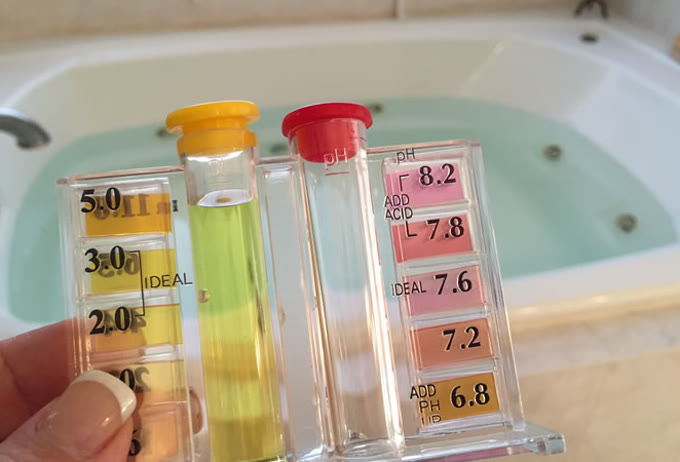
Where chlorine fits. Chlorine is a recognised skin and barrier irritant, it is, after all, added to water precisely because it is biologically reactive. In the infant study, the effect of chlorine was harder to separate statistically from hardness3, so I will not tell you the science is fully settled; it is not. What I can tell you is mechanistically uncontroversial: chlorine strips lipids, hot water accelerates that stripping, and eczema skin has no lipids to spare. For a barrier that is already leaking, a hot chlorinated shower is a twice-daily withdrawal from an account that is already overdrawn.
"Wait, isn't chlorine used to TREAT eczema?"
Sharp question, and yes: dilute bleach baths are a real, evidence-based therapy some dermatologists prescribe for infected eczema. But note what makes them therapeutic: a precisely diluted concentration, lukewarm water, a short soak, a defined frequency, followed immediately by rinsing and moisturising, all under medical direction. That is a controlled, intermittent antiseptic treatment. A daily hot chlorinated shower is the opposite: uncontrolled concentration, hot water, every single day, with no clinical purpose. The dose and the context make the difference, as they do everywhere in medicine.
My practical conclusion. Filtering your shower water will not cure eczema, nothing will, and it does not replace pillars one, two, four, or five. But of all the changes my patients can make, it is among the easiest to sustain, because it requires zero daily effort: install it once and every shower after that is automatically gentler. For a condition where consistency beats intensity every time, that property is worth a great deal. That is why I consider water quality a core part of trigger control for eczema patients here, not an optional extra.
What To Look For In A Shower Filter (And What I Recommend)
If you decide to filter your shower water, four things matter:
- De-chlorination that works in hot water. Many filter media perform well in cold water and poorly at shower temperatures. Calcium sulfite is the medium with the best hot-water performance, which is exactly the condition that matters. And because most of Singapore's residual is chloramine rather than free chlorine, the filter needs a KDF-55 stage as well, which is the medium that reduces chloramine.
- A physical filtration stage for the sediment, rust, and particulates that older pipes contribute.
- It must fit a Singapore bathroom, which almost always means a handheld shower on a standard hose fitting.
- Maintenance you will actually keep up with. An expired filter is just an ornament. Automatic refill delivery is what keeps people consistent, a subscription that shows up beats a reminder you ignore.


Figures above are from Halo's own four-week volunteer consumer study, including 88% of participants reporting reduced eczema flare-ups. A brand study is not a clinical trial, and I weigh it accordingly, but it is consistent with what the independent water-hardness research and my patients describe.
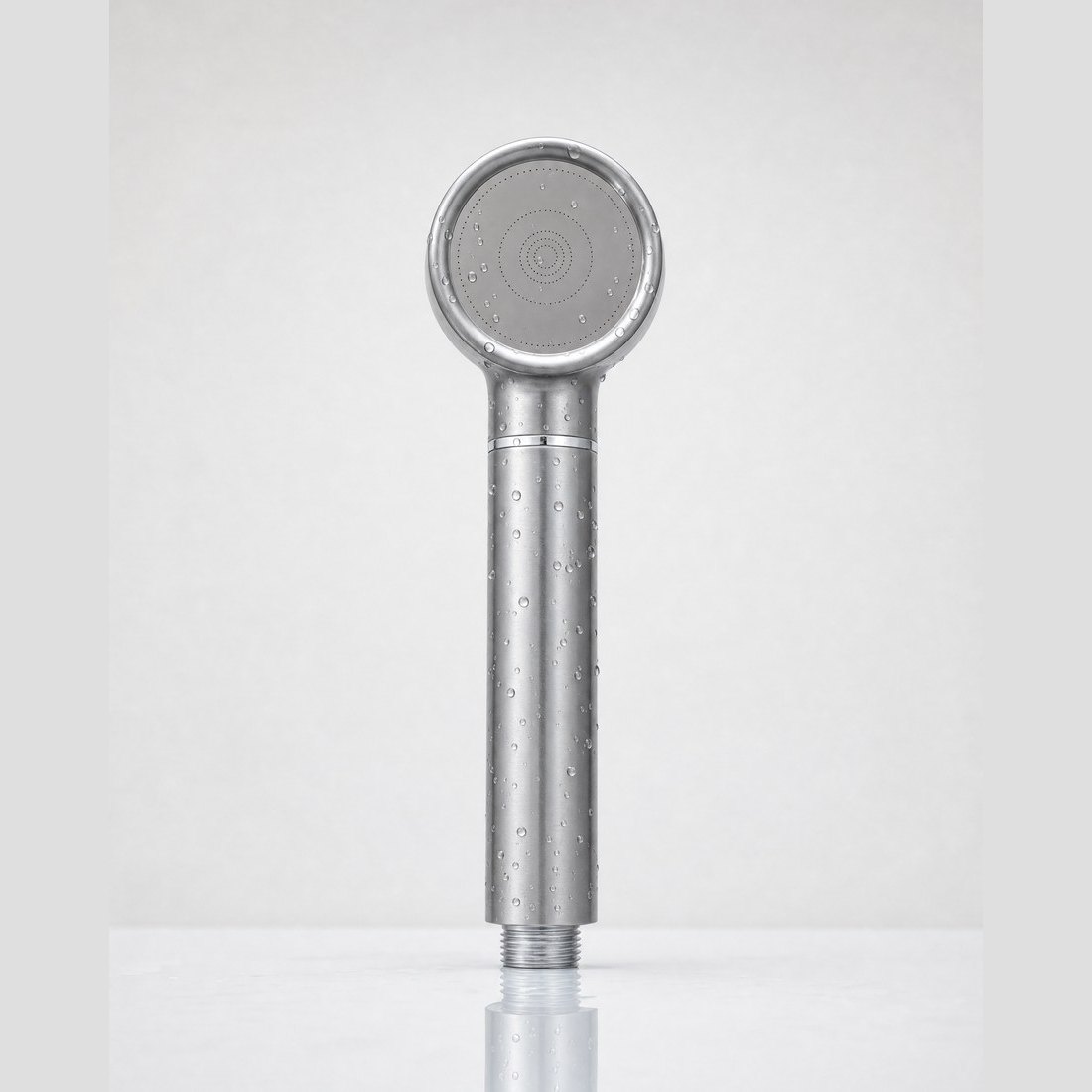


The one I recommend: Halo
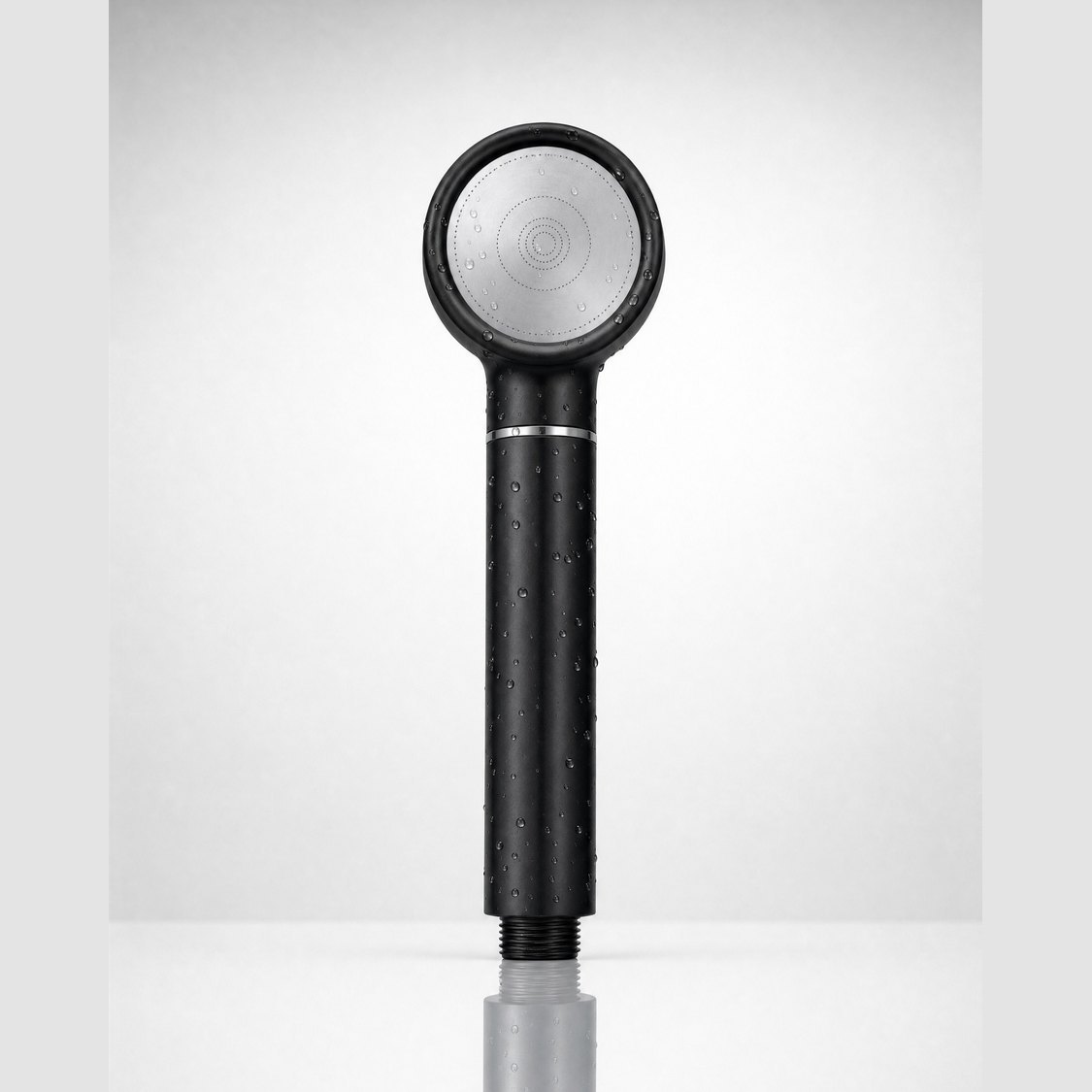
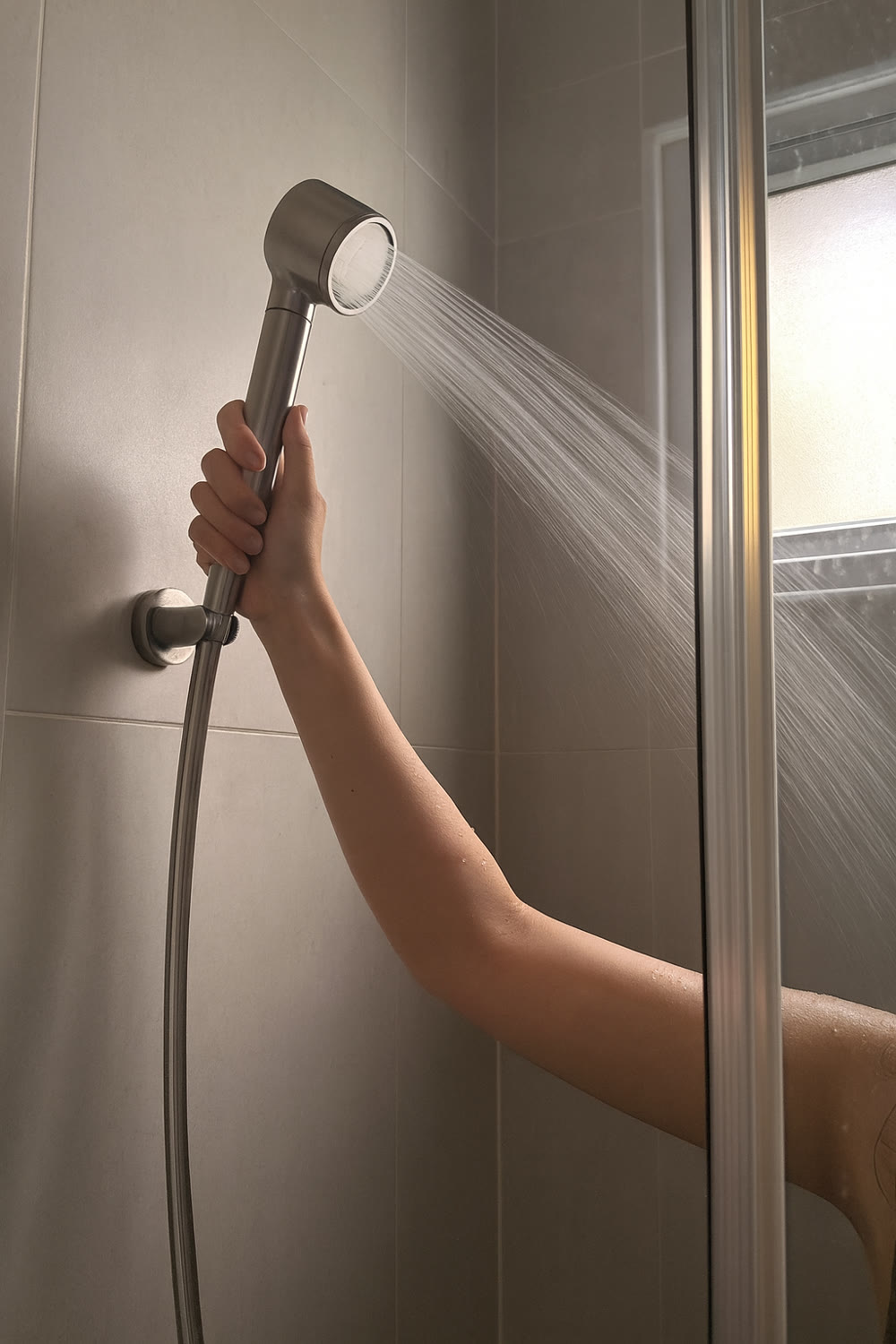
I compared the filtered showerheads available in Singapore against those four criteria in a separate guide, and the Halo Filtered Showerhead is the one I recommend and use at home. It pairs KDF-55 and calcium sulfite in the head (99% de-chlorination, effective at shower temperatures, with KDF-55 as the stage that takes out chloramine) with an ultrafine PP cotton stage in the handle (particulates down to 1 micron), removes 99.9% of chlorine and chloramine along with heavy metals, exceeds NSF-177 standards, fits standard SG hose fittings in five minutes, and sends fresh filters automatically every 60 days (S$39 on subscription), which for consistency-dependent eczema care is exactly the right design.
It is S$125 (less with code RELAX15), with a 30-day money-back guarantee, so trying it carries no real risk.
Check Halo Availability →The Shower Routine I Give My Eczema Patients
Pin this next to your bathroom mirror
- Lukewarm water only. If the mirror fogs up, it's too hot.
- Filtered water. Let the filter take the chlorine and particulates out before they reach your skin.
- Under ten minutes. Long soaks waterlog and then dehydrate the barrier.
- Gentle, fragrance-free, soap-free cleanser, and only where you actually need it.
- Pat dry. Rubbing with a towel is mechanical trigger number one.
- Moisturise within three minutes, on damp skin, generously. This single habit does more than any product swap.
When To See A Dermatologist
Self-care has limits, and knowing them is part of good management. Please see a doctor, and ideally a dermatologist, if:
- Your eczema is weeping, crusting, or increasingly painful, which can signal infection
- Sleep is being disrupted by itch, in you or your child
- Flares keep returning despite consistent moisturising and trigger control
- Over-the-counter treatments have stopped working, or you're using steroid creams for long stretches without review
- Eczema is affecting the face, eyelids, or large areas of the body
Modern eczema care has more tools than most patients realise, and nobody should be white-knuckling through flares that we can treat.
Frequently Asked Questions
No, and be wary of anything promising a cure. Eczema can, however, be controlled so well that skin is calm most of the time, and many children improve substantially as they grow older. Control comes from the five pillars working together, consistently.
No. It removes one recurring irritant, chlorinated, particulate-laden water, from your daily routine. That makes every other pillar work a little better, but it does not replace moisturising, trigger control, or prescribed treatment. Think of it as fixing the environment your skin lives in, not as a therapy.
Gentler, filtered water benefits the whole household, and the infant research above is precisely about early-life water exposure. But children with eczema should be under a doctor's care, and any treatment plan for them belongs in that conversation.
Traditional soap is alkaline and strips the barrier, so yes, replace it with a soap-free, fragrance-free cleanser (a "syndet"). You do not need to cleanse every part of your body with product at every shower; water is enough for most areas most of the time.
Used correctly, at the right potency, for the right duration, under medical guidance, they are safe and remain one of our most effective tools. The harm I see far more often is from undertreatment: flares left to smoulder, scratching, infection, and thickened skin. If you're worried about steroids, raise it with your doctor rather than quietly stopping.
References
- Skin Research Institute of Singapore / A*STAR. Atopic dermatitis affects an estimated 20% of children and 11% of adults in Singapore. a-star.edu.sg
- National Skin Centre, Singapore. NSC handled over 14,000 new eczema cases in FY2023, about 30% of all new cases at the centre. nsc.com.sg
- Perkin MR, et al. Association between domestic water hardness, chlorine, and atopic dermatitis risk in early life: a population-based cross-sectional study. J Allergy Clin Immunol. 2016;138(2):509-516. jacionline.org
- Danby SG, et al. The effect of water hardness on surfactant deposition after washing and subsequent skin irritation in atopic dermatitis patients and healthy control subjects. J Invest Dermatol. 2018;138(1):68-77. sciencedirect.com
- Jabbar-Lopez ZK, et al. The effect of water hardness on atopic eczema and skin barrier function: a systematic review and meta-analysis. Clin Exp Allergy. 2021;51(3):430-451. wiley.com
- Tay YK, et al. The prevalence and descriptive epidemiology of atopic dermatitis in Singapore school children. Br J Dermatol. 2002;146(1):101-106. pubmed.ncbi.nlm.nih.gov