A Dermatologist's Guide To Dandruff And Itchy Scalp
Why it is not dry scalp and never was, what is actually causing the flakes, why your medicated shampoo stops working the moment you stop, and the small change to how you use it that halves the relapse rate.

I've practised dermatology for over 20 years. Dandruff is the condition patients apologise to me about, which tells you how much shame is attached to something that is neither your fault nor a matter of hygiene. It is also one of the most fixable things I see, provided you understand what it actually is. Almost everyone I meet has the mechanism backwards, and getting it right changes what you do.
It Is Not Dry Scalp. It Is The Opposite.
This is the misconception that keeps people stuck, because it leads directly to the wrong treatment: washing less and applying oils, both of which make it worse.
Researchers measured this properly in a tropical Southeast Asian population, comparing 42 people with scalp seborrhoeic dermatitis against 40 healthy controls using instruments rather than impressions1. The affected scalps had:
- Significantly higher surface lipid. More oil, not less, and it rose with severity.
- Significantly lower hydration and significantly higher water loss through the skin, meaning a genuinely disrupted barrier.
- No difference in surface pH at all. Worth remembering the next time something is sold to you for "rebalancing your scalp pH".
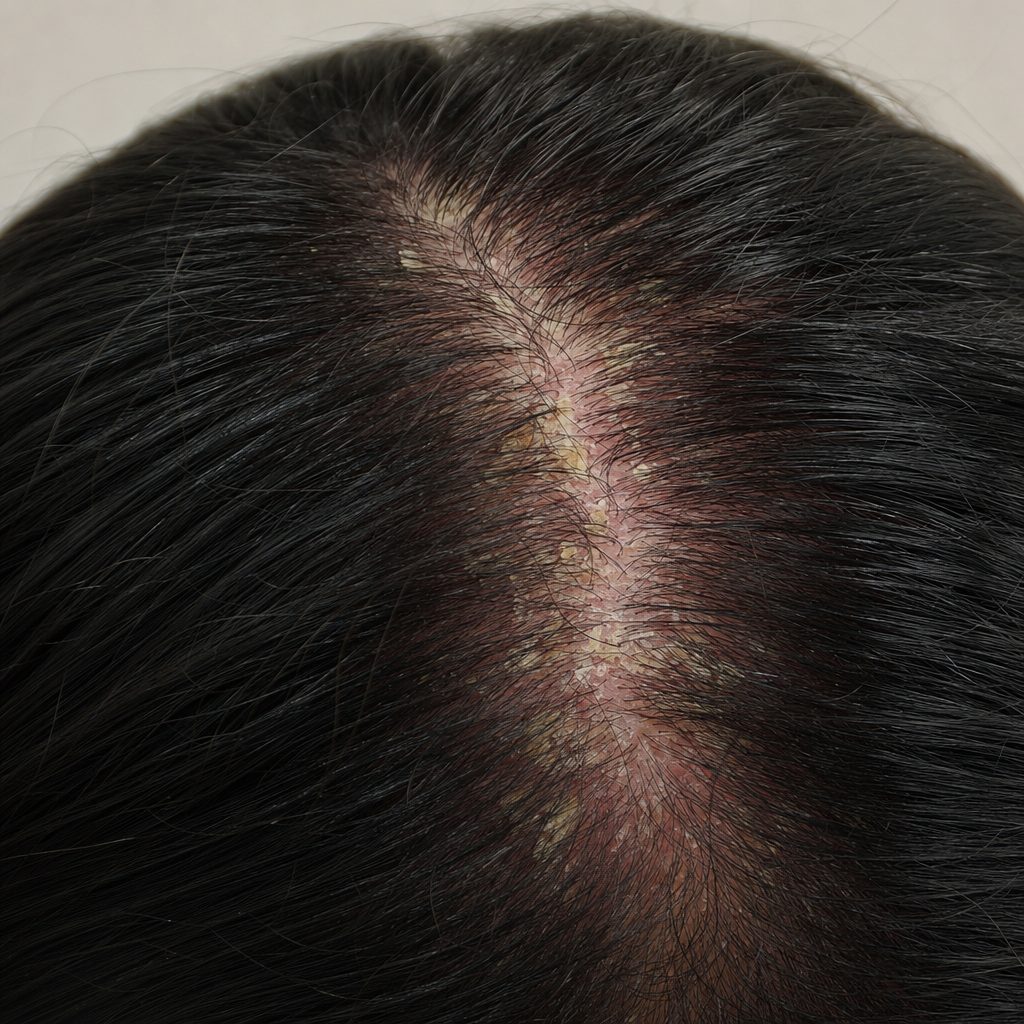
So the picture is a greasy scalp with a damaged barrier that is losing water. It feels dry and tight because the barrier is not working, not because there is a shortage of oil. Adding oil feeds the actual problem.
What Is Actually Happening
Dandruff requires three things at once, and all three must be present2. This is why it runs in some people and not others despite identical habits.
The yeast, Malassezia, is not an infection you caught. It is normal resident flora living on nearly every adult scalp. It cannot make its own fats, so it breaks down the oils on your scalp, consumes the saturated fats it needs, and leaves the unsaturated ones behind3. Those leftovers penetrate the outer layer of the skin, and in susceptible people they cause irritation and drive the surface layer to hyperproliferate and shed too fast, which is the flaking you see2,3.
Two consequences follow immediately. You are not going to eradicate anything, because the yeast is supposed to be there and lives on everybody. And dandruff and seborrhoeic dermatitis are the same condition, differing in severity rather than in kind3, so if your "dandruff" has become red, greasy and itchy, you have not developed a new disease.
How Common, And Does Our Climate Make It Worse?
You will see it claimed everywhere that dandruff affects half of all adults. I traced that figure, and it comes from a statement in a review article rather than from any population survey. It is probably roughly right, but I am not going to present it as a research finding when it is not one.
What we do have is solid data on the more severe end. A meta-analysis of 121 studies covering over 1.26 million people found seborrhoeic dermatitis in 4.38% of people overall and 5.64% of adults4. Notably, the authors identified most of Southeast Asia as a gap in the research, and there is no published Singapore prevalence figure for dandruff specifically.
On our climate, I have to give you an unsatisfying answer. Sebum output does rise with ambient temperature, through increased delivery of oil to the surface rather than more active glands5, and since oil is the substrate, more heat plausibly means more fuel. Patients in tropical Asia do report heat as their single commonest trigger. But the harder evidence points the other way: a study of 5,316 seborrhoeic dermatitis patients found frequency was inversely correlated with temperature and humidity, peaking in the coldest months6, and in the global meta-analysis the lowest national prevalence was India. So heat may well aggravate your dandruff, and many people here find that it does, but I cannot honestly tell you the tropics cause more dandruff.
Why It Always Comes Back (And The Fix)
This is the part that changes outcomes, and it is why I wanted to write this guide.
Almost everyone treats dandruff reactively. Flakes appear, you use the medicated shampoo, it works, you stop, and some weeks later it returns and you conclude the shampoo "stopped working". It did not stop working. You stopped removing one of the three required factors, and the yeast that never left simply resumed.
A trial of 575 patients demonstrates this cleanly7. They were treated with ketoconazole 2% shampoo twice weekly, and 88% had an excellent response. Then those who responded were followed for six months to see who relapsed:
One medicated wash a week, indefinitely, is the whole trick. Not a course. Not until it clears. A permanent low-effort habit, using the other days for whatever shampoo you actually like. It is the difference between managing this once and fighting it forever.
Using Medicated Shampoo Properly
Pick an active that works, then rotate if it fades
The Cochrane review of 51 studies and 9,052 participants supports ketoconazole 2% and ciclopirox olamine, which performed equivalently to each other8. Selenium sulfide is comparably effective, though in a head-to-head trial all of the adverse events occurred in the selenium group9. Coal tar is a legacy option: a non-tar shampoo matched it clinically and beat it on both yeast reduction and rebound10. Zinc pyrithione works, and one honest note about it: the EU removed it from cosmetics in 2022 under a hazard-based reproductive-toxicity classification, not because of any finding of harm from washing your hair with it. It remains available and permitted here and in the US.
Leave it on. This is where most people go wrong.
Lathering and rinsing immediately gives the antifungal almost no time on the skin where the yeast is. Work it into the scalp, not the hair, and leave it for three to five minutes before rinsing. I should be straight with you that no trial has established the optimal contact time and the over-the-counter labels do not specify one; this is pharmacological reasoning and standard clinical practice rather than a proven number. But it costs you three minutes, and I see it turn apparent treatment failures into successes regularly.
Wash more often, not less
Since sebum is the fuel, letting it accumulate makes things worse. In studies of Asian populations, scalp and hair satisfaction was optimised at around five to six washes a week, daily washing beat weekly on every measure, and concerns about "over-cleaning" were not borne out11. In fairness, that research was funded entirely by a shampoo manufacturer, which you should weigh; but it is the best data available and it aligns with the mechanism.
Keep each of those washes gentle
Where water fitsWashing five or six times a week only works if each wash is not itself an assault on a scalp whose barrier is already leaking. So: no scratching with fingernails, no scrubbing, no very hot water, and nothing abrasive. This is also where filtering your shower water earns its place, and it earns it strongly: it takes the oxidising disinfectant out of every one of those washes, which is what makes washing this often sustainable instead of self-defeating. I set out the evidence for that below.
Stop putting oil on it
This follows directly from the mechanism: Malassezia is lipid-dependent and needs the fats you are applying. There is a published clinical signal that hair oils worsen seborrhoeic dermatitis12. Coconut oil is the common instinct here and the evidence on it is genuinely mixed rather than clearly bad, but on an actively flaking scalp I would leave heavy plant oils alone. Interestingly, medium-chain triglycerides are actively inhibitory to Malassezia13, so not all oils behave the same, but this is not the place to experiment.
Where Your Shower Water Fits
The treatment plan above asks you to wash five or six times a week, on a scalp whose barrier is already measurably damaged. So what you wash in matters more here than it would for someone with a healthy scalp.
Chlorine is in your water because it is chemically aggressive. Disinfection works by oxidising the proteins and lipids of living things, and it does not distinguish between an organism in the pipe and the lipid structure of your skin. PUB's published figures put Singapore's supply at an average 2.27 mg/L total chlorine, of which 2.10 mg/L is monochloramine16, the more persistent form. That is roughly ten times the combined chlorine WHO says a well-managed swimming pool should stay below.
In the most careful controlled study of washing in chlorinated water, at 1.5 parts per million of free chlorine, below Singapore's total residual, researchers recorded significantly increased redness, attributed to "a specific irritant effect of free chlorine", and the highest levels of interleukin-1α, an inflammatory signalling molecule17. Hard water without chlorine produced no such rise. That study was done on body skin in eczema research rather than on scalps, so I am extending it by analogy, and you should know that.
Why the analogy is a fair one here. Remember what the instrumented measurements found on the seborrhoeic scalp: significantly raised water loss through the skin and significantly reduced hydration1. That is a barrier in the same compromised state that made chlorine's effects measurable in the study above. You are then asked to expose it to that water five or six times a week, indefinitely, because reducing wash frequency makes the underlying condition worse. Removing the oxidant from those washes is the way to do the frequent washing your scalp needs without the irritation that frequency would otherwise add.
Two claims to ignore, and one to act on
Act on the chlorine. Removing it takes a documented skin irritant out of every wash, on a scalp that measurably cannot hold water properly, and it does so without asking anything of you after installation. That is a real benefit and I would recommend it. What it is not is a substitute for the medicated shampoo, which used weekly and left on is what actually controls this condition. Use both.
Two popular claims are worse than merely untested, and you should not pay for either. The scalp pH story is contradicted twice over: Malassezia grows equally well across the entire pH range from 5 to 814, and the instrumented study found no pH difference at all between affected and healthy scalps1. "Rebalancing your scalp pH" solves a problem that has not been shown to exist. And the mineral story has no scalp evidence behind it: the one study measuring hard-water deposits looked at the hair shaft and found no significant calcium difference and no structural change15. Singapore's water is soft anyway at 42.7 mg/L16, so a softener would be wasted money. The disinfectant is the part worth removing.
So the order of priority is clear. The weekly maintenance wash in the chart above is what decides whether this condition controls you or you control it, and nothing replaces it. Removing chlorine is the supporting move: it makes the frequent washing your scalp actually needs sustainable, on a barrier that is already leaking. Do the first, and the second makes it easier to keep doing.
What To Look For In A Shower Filter (And What I Use)
- De-chlorination that works in hot water. Many media perform well cold and poorly at shower temperatures. Calcium sulfite performs best hot. And because most of Singapore's residual is chloramine rather than free chlorine, the filter needs a KDF-55 stage as well, which is the medium that reduces chloramine.
- A physical filtration stage for sediment, rust and particulates from older pipes.
- It must fit a Singapore bathroom, which almost always means a handheld shower on a standard hose fitting.
- Maintenance you will actually keep up with. An expired filter is an ornament.


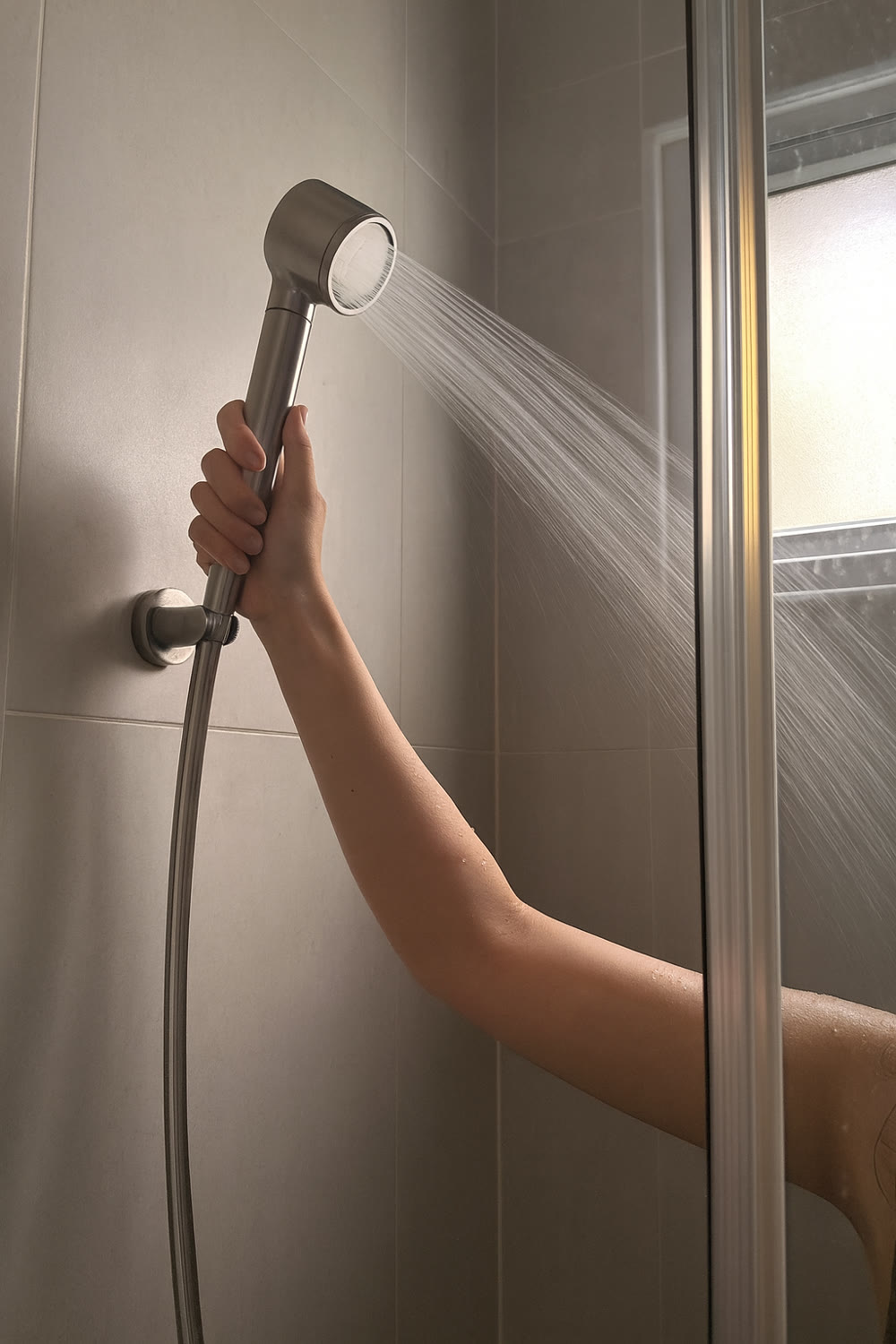
The one I use: Halo
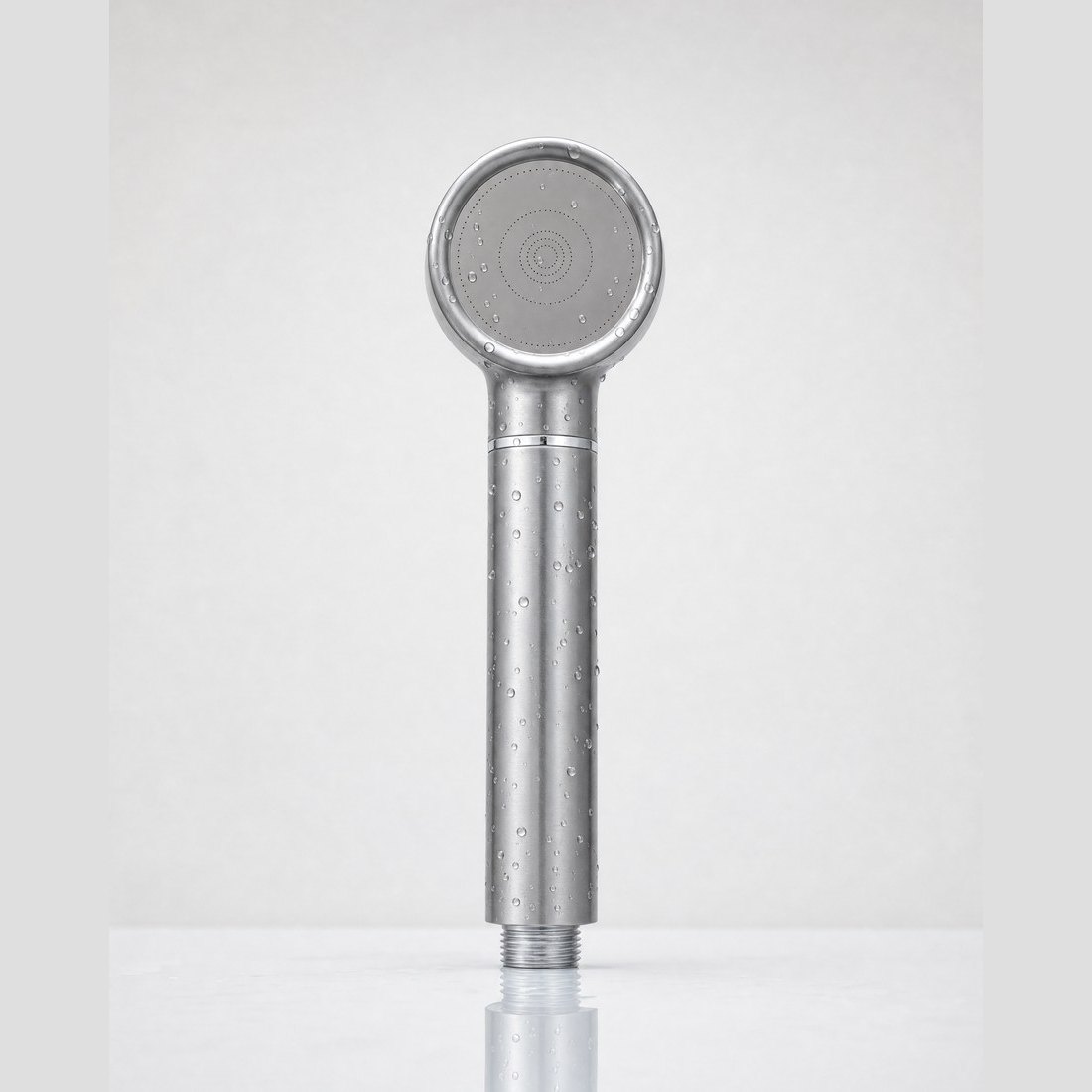
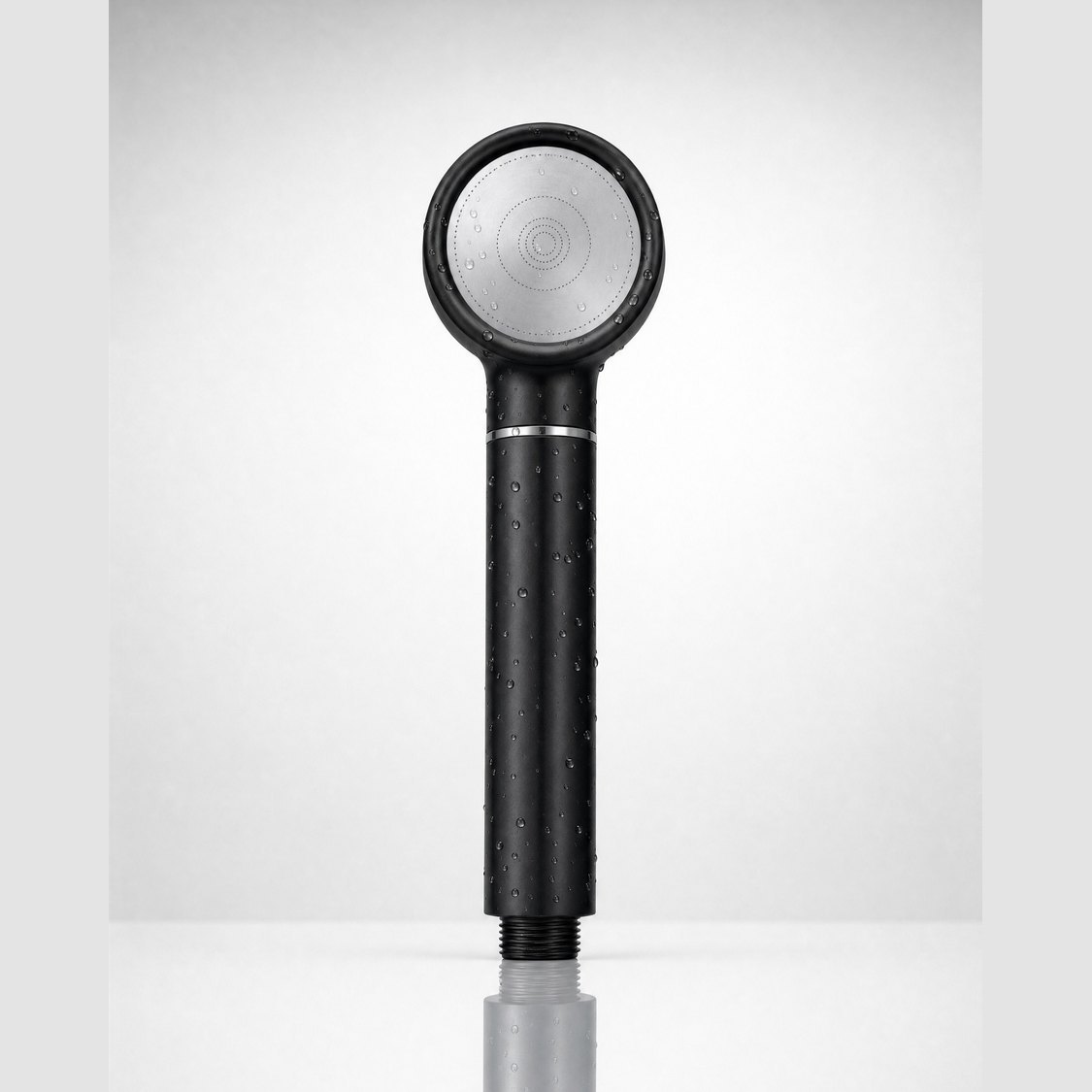
I compared the filtered showerheads available in Singapore against those criteria in a separate guide, and the Halo Filtered Showerhead is the one I recommend and use at home. It pairs KDF-55 and calcium sulfite in the head with an ultrafine PP cotton stage in the handle at 1 micron, removes 99.9% of chlorine and chloramine along with heavy metals, exceeds NSF-177 standards, fits standard Singapore hose fittings in about five minutes, and sends fresh filters automatically every 60 days at S$39 on subscription.
It is S$125, less with code RELAX15, with a 30-day money-back guarantee, so trying it carries no real risk. For dandruff, it makes the frequent washing this condition requires far gentler on an already-leaking scalp barrier. The medicated shampoo is still the treatment.
Check Halo Availability →The Scalp Routine I Give My Patients
Pin this next to your bathroom mirror
- Clearing phase: medicated shampoo twice a week for two to four weeks. Around 88% of people clear in this window.
- Then maintenance: once a week, forever. This is the step that decides whether it comes back. Do not stop because it worked.
- Apply to the scalp, not the hair, and leave it on for three to five minutes before rinsing.
- Wash often. Five to six times a week is fine and probably better. Use your normal shampoo on the other days.
- Lukewarm water, fingertips only. No nails, no scrubbing, nothing abrasive on a barrier that is already leaking.
- No oils on an actively flaking scalp. You are feeding the organism causing the problem.
- If one active stops helping after months, switch to another rather than concluding nothing works. Rotating is common practice, though I should say it has not been formally tested in a trial.
When to see a dermatologist
Dandruff is usually straightforward. These situations are not, and they are worth a proper look rather than another shampoo:
- No improvement after four to six weeks of correct antifungal use. Correct meaning applied to the scalp, left on, at the right frequency. If it has genuinely failed, the diagnosis is the thing to question.
- Hair loss along with the flaking. This needs assessment rather than assumption, and my hair loss guide explains why some causes are urgent.
- Thick, well-defined, silvery plaques, especially extending past the hairline, on the elbows or knees, or with nail changes. That pattern suggests scalp psoriasis rather than dandruff, and it is treated differently.
- Spread to the face, eyebrows, chest or skin folds, or disease that is extensive and stubborn.
- Sudden, severe, explosive onset. Seborrhoeic dermatitis can be an early sign of immune compromise, and it is also associated with Parkinson's disease. Rare, but worth knowing.
- Scaling with broken hairs or bald patches, particularly in a child. Fungal scalp infection is a different organism entirely and needs oral medication; shampoo alone will not clear it.
Frequently Asked Questions
Yes, as part of the plan. Correct treatment means washing five or six times a week on a scalp with measurably raised water loss and reduced hydration, and chlorine at concentrations below Singapore's own has been shown to redden skin and raise an inflammatory marker in it. Taking that out of every wash is what makes washing this often sustainable rather than irritating, and it needs no effort once installed. It works alongside your medicated shampoo rather than replacing it. Do ignore anyone selling you a filter on scalp pH or mineral buildup, since the measurements contradict both.
No, and this is worth saying clearly because the shame around it is real and misplaced. It is driven by a yeast that lives on virtually every adult scalp, your own natural oil, and an individual sensitivity you did not choose and cannot change. People with immaculate hygiene get it and people with poor hygiene do not. If anything, washing too little makes it worse, so the instinct to hide it by washing less backfires.
Usually one of three things. You stopped when it cleared, so it came back on schedule; the fix is a permanent weekly wash. You are rinsing it straight out, so the antifungal never had contact time; leave it three to five minutes on the scalp. Or you genuinely need a different active, in which case switch from ketoconazole to ciclopirox or vice versa. If none of that helps within four to six weeks, question the diagnosis rather than the product.
They are genuinely confused, sometimes even in clinic, and some people have both. Dandruff and seborrhoeic dermatitis tend to be greasier, yellower, more diffuse and less sharply bordered. Scalp psoriasis tends to form thicker, well-defined plaques with silvery scale, often extending slightly beyond the hairline, and frequently comes with changes on the elbows, knees or nails. If antifungal shampoo is not working, this is one of the first things I reconsider.
Not on an actively flaking scalp. The organism driving dandruff cannot make its own fats and depends on the oils available to it, so applying more is feeding it, and there is a published clinical signal that hair oils worsen the condition. The instinct comes from believing the problem is dryness, which the measurements say it is not. Once things are properly controlled, you have more latitude.
Not permanently, and I would rather set that expectation honestly. The yeast is normal resident flora, so you are managing an ongoing tendency rather than curing an infection. The good news is that management is genuinely easy once you accept that framing: one medicated wash a week took relapse over six months from 47% down to 19% in the trial data. That is a few minutes a week for a condition that otherwise dominates what you wear and how you feel.
References
- Suchonwanit P, Triyangkulsri K, Ploydaeng M, Leerunyakul K. Assessing Biophysical and Physiological Profiles of Scalp Seborrheic Dermatitis in the Thai Population. Biomed Res Int. 2019;2019:5128376. ncbi.nlm.nih.gov
- DeAngelis YM, Gemmer CM, Kaczvinsky JR, Kenneally DC, Schwartz JR, Dawson TL Jr. Three etiologic facets of dandruff and seborrheic dermatitis: Malassezia fungi, sebaceous lipids, and individual sensitivity. J Investig Dermatol Symp Proc. 2005;10(3):295-297. pubmed.ncbi.nlm.nih.gov
- Ro BI, Dawson TL. The role of sebaceous gland activity and scalp microfloral metabolism in the etiology of seborrheic dermatitis and dandruff. J Investig Dermatol Symp Proc. 2005;10(3):194-197. pubmed.ncbi.nlm.nih.gov
- Polaskey MT, et al. The Global Prevalence of Seborrheic Dermatitis: A Systematic Review and Meta-Analysis. JAMA Dermatol. 2024;160(8):846-855. ncbi.nlm.nih.gov
- Piérard-Franchimont C, Piérard GE, Kligman A. Seasonal modulation of sebum excretion. Dermatologica. 1990;181(1):21-22. pubmed.ncbi.nlm.nih.gov
- Akbulut TO, Suslu H, Atci T. Is the Frequency of Seborrheic Dermatitis Related to Climate Parameters? Sisli Etfal Hastan Tip Bul. 2022;56(1):91-95. ncbi.nlm.nih.gov
- Peter RU, Richarz-Barthauer U. Successful treatment and prophylaxis of scalp seborrhoeic dermatitis and dandruff with 2% ketoconazole shampoo: results of a multicentre, double-blind, placebo-controlled trial. Br J Dermatol. 1995;132(3):441-445. pubmed.ncbi.nlm.nih.gov
- Okokon EO, Verbeek JH, Ruotsalainen JH, Ojo OA, Bakhoya VN. Topical antifungals for seborrhoeic dermatitis. Cochrane Database Syst Rev. 2015;(5):CD008138. pubmed.ncbi.nlm.nih.gov
- Danby FW, Maddin WS, Margesson LJ, Rosenthal D. A randomized, double-blind, placebo-controlled trial of ketoconazole 2% shampoo versus selenium sulfide 2.5% shampoo in the treatment of moderate to severe dandruff. J Am Acad Dermatol. 1993;29(6):1008-1012. pubmed.ncbi.nlm.nih.gov
- Piérard-Franchimont C, Piérard GE, Vroome V, Lin GC, Appa Y. Comparative anti-dandruff efficacy between a tar and a non-tar shampoo. Dermatology. 2000;200(2):181-184. pubmed.ncbi.nlm.nih.gov
- Punyani S, Tosti A, Hordinsky M, Yeomans D, Schwartz J. The Impact of Shampoo Wash Frequency on Scalp and Hair Conditions. Skin Appendage Disord. 2021;7(3):183-193. Funded in full by the Procter & Gamble Company. ncbi.nlm.nih.gov
- Mayo T, Dinkins J, Elewski B. Hair Oils May Worsen Seborrheic Dermatitis in Black Patients. Skin Appendage Disord. 2023;9(2):151-152. Research letter. pubmed.ncbi.nlm.nih.gov
- Papavassilis C, Mach KK, Mayser PA. Medium-chain triglycerides inhibit growth of Malassezia: implications for prevention of systemic infection. Crit Care Med. 1999;27(9):1781-1786. pubmed.ncbi.nlm.nih.gov
- Matousek JL, Campbell KL, Kakoma I, Solter PF, Schaeffer DJ. Evaluation of the effect of pH on in vitro growth of Malassezia pachydermatis. Can J Vet Res. 2003;67(1):56-59. pubmed.ncbi.nlm.nih.gov
- Alahmmed LM, Alibrahim EA, Alkhars AF, et al. Scanning electron microscopy study of hair shaft changes related to hardness of water. Indian J Dermatol Venereol Leprol. 2017;83(6):740. pubmed.ncbi.nlm.nih.gov
- PUB, Singapore's National Water Agency. Singapore Drinking Water Quality, January to December 2025. Total hardness (as CaCO3) average 42.7 mg/L; pH average 8.0. pub.gov.sg
- Danby SG, Brown K, Wigley AM, et al. The Effect of Water Hardness on Surfactant Deposition after Washing and Subsequent Skin Irritation in Atopic Dermatitis Patients and Healthy Control Subjects. J Invest Dermatol. 2018;138(1):68-77. pubmed.ncbi.nlm.nih.gov