A Dermatologist's Guide To Acne In Singapore
Why inflammation comes before the blocked pore, what our heat actually does to oil, why the dark marks bother my patients more than the spots, and an honest account of what your water does and does not do.

I've practised dermatology for over 20 years, and acne is one of my subspecialty interests, alongside eczema and psoriasis. Acne patients arrive knowing more about skincare than any other group I see, which means the useful thing I can offer is not another product recommendation. It is telling you which of the things you have read are actually true, and which are being sold to you.
How Common Acne Is Here, With Real Numbers
Singapore has unusually good acne data, because the National Skin Centre has been studying it for decades.
of Singaporean adolescents reported having acne in a community study of 1,045 teenagers1
of acne patients at the National Skin Centre are aged 25 or older2
of those adult acne patients are women2
Two things in that data change how people think about their own skin. First, adult acne is not a personal failure or a sign you never grew out of something: in the National Skin Centre's ten-year review, roughly 60% of adult acne patients had adult-onset acne, meaning it started after their teens rather than continuing from them2. Second, adults get a different disease. Cystic acne was significantly more common in the over-25 group than in adolescents, and comedonal acne less so2. If you are 32 and getting deep, painful lumps you never had at 16, that is a recognised pattern, not something you invented.
What Acne Actually Is
Four things drive acne, and they feed each other: oil production driven by hormones, a blockage where the pore lining sheds abnormally, overgrowth of a bacterium called Cutibacterium acnes, and inflammation. Androgen-driven oil production is the mandatory step, the one without which the rest does not happen3.
But the order is not what most people assume. The intuitive story is that a pore gets blocked, bacteria multiply behind the blockage, and then it becomes red and angry. Researchers tested this by taking biopsies of completely normal-looking skin from people with acne and comparing it to skin from people without. In the acne-prone skin, before any blockage was visible, immune cells were already gathered around the follicles, and inflammatory signals were already switched on at levels comparable to a fully formed spot4.
In other words, acne is an inflammatory condition that produces blockages, not a blockage that becomes inflamed. This is not academic. It explains why treatments that only unblock pores go so far and no further, why anti-inflammatory treatment works, and why the skin around a spot behaves differently from ordinary skin even when it looks fine.
And acne skin has a weaker barrier than you would expect. When researchers measured the lipids in the outer layer of acne-prone skin, they found significantly reduced ceramides compared with people without acne, and correspondingly poorer water retention5. This is the opposite of what the "oily skin doesn't need moisturiser" instinct suggests, and it matters, because almost everything we prescribe makes that barrier temporarily worse before it gets better.
What Singapore's Climate Actually Does
Our average temperature sits near 28°C and humidity around 82%. Here is what that genuinely does, and what it doesn't.
Heat increases how much oil reaches your skin surface. The classic measurement found that sebum arriving at the surface changed by roughly 10% for every 1°C change in skin temperature6. Worth being precise, because this figure gets misquoted: later work confirmed the effect comes from increased delivery of sebum to the surface, not from your glands becoming more numerous or more active. Your face is not producing dramatically more oil in the heat so much as delivering it faster.
Patients in tropical climates do report seasonal worsening. In a study of 171 acne patients in a tropical setting, 40% reported their acne worsened in the hot season, against 6% in the cool season, and both temperature and humidity varied significantly with those flares7. That is patient-reported and from Delhi rather than Singapore, so treat it as consistent with local experience rather than proof.
Friction and occlusion are the properly documented local villain. Acne mechanica is a recognised entity caused by pressure, occlusion, friction and heat acting on skin8. That is helmet straps, bag straps, sports gear, phone screens, prolonged mask wear and anything pressed against damp skin in this weather. In a study of mask-related skin reactions in an East Asian population, prolonged N95 wear roughly tripled the odds of acne worsening9.
Singapore's own national acne guideline states plainly that acne "can be aggravated by occupation, sports, and the humid tropical climate of Singapore"10. What I will not tell you, because nobody has shown it, is that sweat or humid air directly creates blocked pores. The documented mechanism is pressure and friction on hot skin, which is a different and more fixable problem.
The Part Nobody Warns You About: The Marks Left Behind
For most of my patients with medium to deeper skin tones, the spot is a two-week problem and the brown mark it leaves is a two-year one. This deserves far more attention than it gets.
A study across seven Asian countries, co-authored by a National Skin Centre dermatologist, examined 324 consecutive acne patients11:
- 58.2% had post-inflammatory hyperpigmentation, the flat brown or dark marks left after a spot settles.
- 80.2% of those affected had only mild to moderate acne. You do not need severe acne to be left with significant marks.
- It lasted a year or more in over half of those affected, and five years or more in 22.3%.
- Patients described the pigmentation as often as bothersome as the acne itself, sometimes more so.
Now the genuinely reassuring part, and it comes from Singapore's own guideline. In the Dermatological Society of Singapore's scar grading system, flat dark marks are classified as grade 0, which is to say they are not scars at all10. The guideline calls them pseudoscars. Real scars, the indented or raised kind, are permanent and cannot be reversed. Flat pigmentation is not permanent. It is slow, sometimes exasperatingly slow, but it fades.
The practical conclusion follows directly: the most effective treatment for these marks is treating the acne early enough that the inflammation causing them is shorter and milder. Expert consensus reached exactly this position, recommending early effective acne treatment as the foundation, with pigment-directed treatments added on top12. Every week a spot stays inflamed is a deposit into the mark it leaves.
The Variable You Have Never Changed
You have changed your cleanser, your actives, your moisturiser, probably your pillowcase. One input has stayed identical throughout: the water you rinse it all off with, twice a day, on skin that is already compromised.
Chlorine is in that water because it is chemically aggressive. Disinfection works by oxidising the proteins and lipids of living things, and chlorine cannot distinguish between a microorganism in the pipe and the lipid structure of your skin barrier. PUB's published figures put Singapore's supply at an average 2.27 mg/L total chlorine, of which 2.10 mg/L is monochloramine13, the more persistent form, chosen precisely because it survives the journey to your tap. For scale: WHO guidance is that a well-managed swimming pool should keep combined chlorine below 0.2 mg/L. Our tap water runs roughly ten times that.
That is not inert on skin. In the most careful study of washing in chlorinated water, at just 1.5 parts per million of free chlorine, below Singapore's total residual, researchers recorded significantly increased redness, which they attributed to "a specific irritant effect of free chlorine", and the highest levels of interleukin-1α, an inflammatory signalling molecule in the skin14. Hard water without chlorine produced no such rise, so the inflammatory signal tracked the chlorine specifically. With longer exposure it goes further: two hours in chlorinated water raised water loss through the skin significantly at every site measured21.
Here is why that lands harder on you than on most people. Acne-prone skin is not robust skin with spots on it. When researchers measured the lipids in its outer layer, they found significantly reduced ceramides and correspondingly poorer water retention than in people without acne5. Your barrier starts short on reserves. Then the treatments that genuinely work push it further: water loss through the skin rose significantly with 2.5% benzoyl peroxide in a controlled trial19, and Singapore's own guideline states plainly that the skin barrier should be restored in order to tolerate treatment at all10.
So the usual sequence here is a barrier that begins short of ceramides, a treatment regimen that strips it further, and then a twice-daily rinse in an oxidising disinfectant at a concentration shown to redden skin and raise inflammatory markers. Removing that last step is the only one of the three you can change without giving anything up. It does not treat acne and it will not clear a breakout. What it does is stop adding insult to the barrier you need intact in order to keep using the treatments that do the real work, which in practice is what determines whether people can stay on a retinoid long enough to see it succeed.
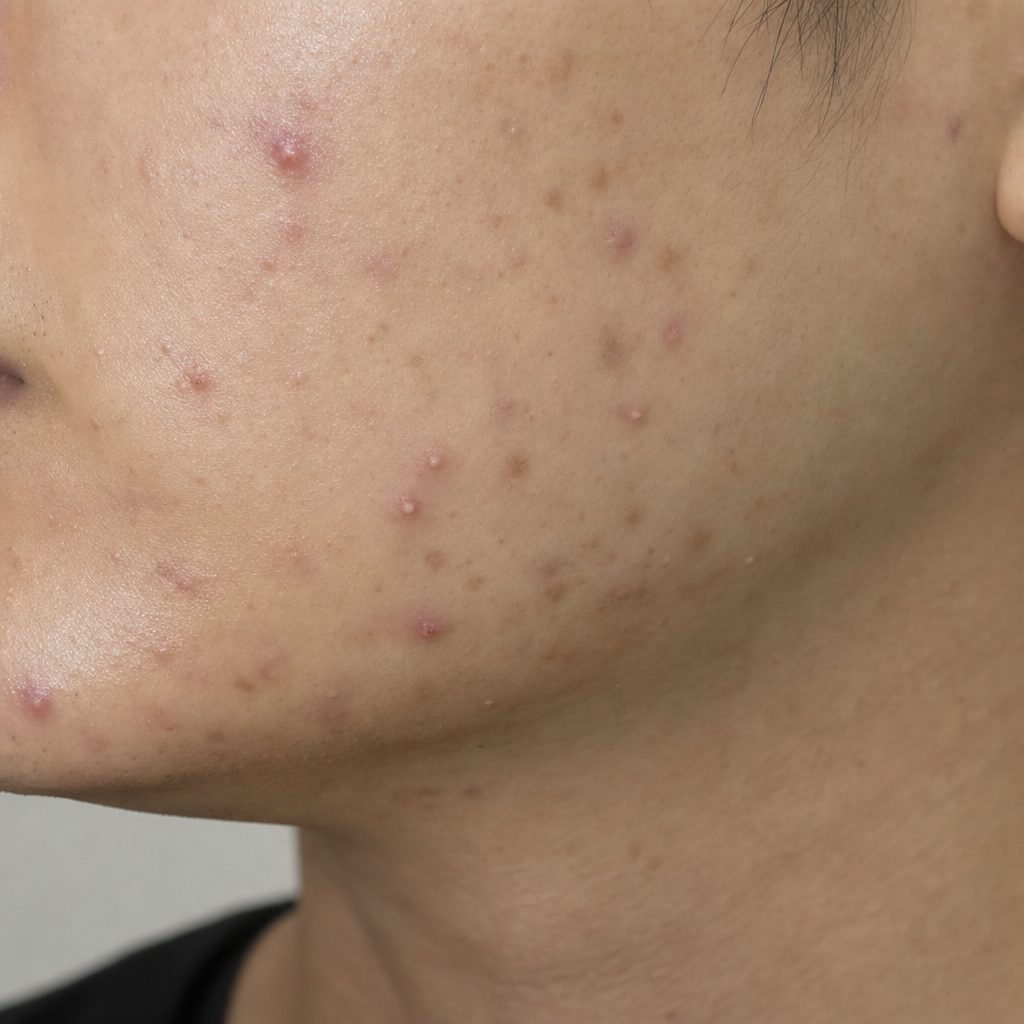
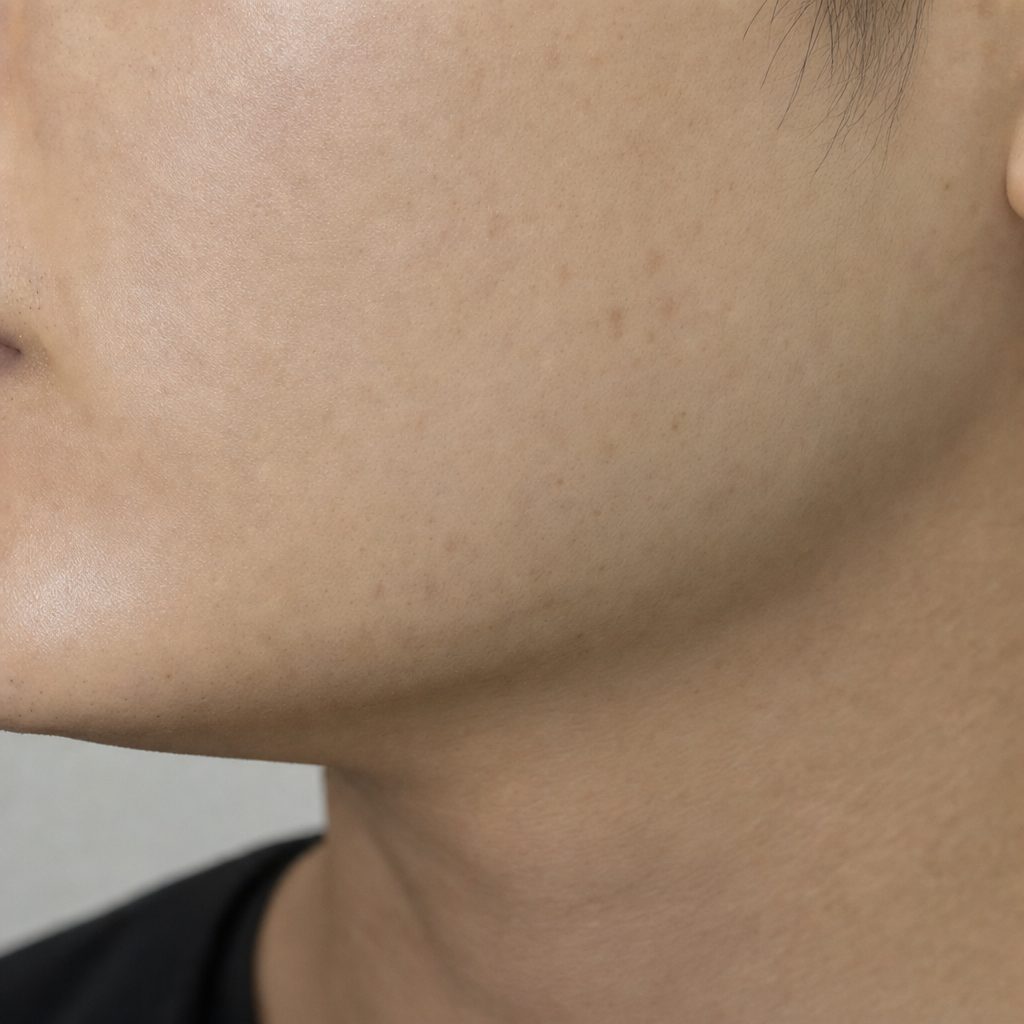
Two water claims I want to disarm before someone sells them to you, because getting these wrong costs money.
Two acne-and-water claims that are not true
"Hard water causes acne." There is no published study on hard water and acne. Not a weak one, not a contested one: none. Every source I have seen making this claim traces back to a company selling filters or softeners. And importantly for you: Singapore's water is soft. PUB's own report gives total hardness averaging 42.7 mg/L as calcium carbonate13, comfortably in the "soft" band, while the hard-water studies that exist examined water from 76 to over 350 mg/L. Anyone selling you a water softener for Singapore skin is selling you a solution to a problem this country does not have. The disinfectant is the variable that matters here, not the minerals.
"Chlorine strips your skin's oils, so your skin overproduces oil to compensate." This one sounds plausible and is repeated everywhere. There is no evidence for it. Oil production is driven by androgens acting on the sebaceous gland, and no feedback loop has ever been documented by which surface dryness instructs the gland to produce more. Whatever chlorine does to your skin, driving rebound oil production is not it.
"Chloracne proves chlorine causes acne." It does not, and the name is a historical accident from 1897. Chloracne is caused by dioxins and related compounds, not by the chlorine in your water, and it is not really acne: the sebaceous glands are transformed into keratin cysts rather than becoming overactive. It is a different disease with a misleading name, and it has nothing to do with your shower.
There is a second thing your water is doing, and this one is about pH.
Healthy skin sits slightly acidic. In a study of 330 people, skin surface pH averaged 4.9 after normal washing and dropped to an estimated natural value of about 4.7 when participants left their skin alone15. That acidity is not incidental: it supports the permeability barrier and helps normal resident bacteria stay attached where they belong16.
Singapore's tap water, per PUB's published figures, has an average pH of 8.013. That is meaningfully alkaline relative to your skin. And the same 330-person study found that washing with plain tap water at around pH 8 raises skin surface pH for up to six hours before it recovers15. Skin with a pH above 5 measures worse on barrier function, moisturisation and scaling than skin below it15.
This chain is real and it is cited. But notice how modest the conclusion is, and notice what it points to. The biggest lever here is not your water, it is what you wash with. Traditional alkaline soap raises skin pH far more, and for longer, than water does. The evidence-based recommendation that follows is to use a low-pH synthetic detergent cleanser16, twice a day, and to stop there.
The Five Things That Actually Control Acne
Treat it early, and treat it properly
Topical retinoids such as adapalene are first-line for both blocked pores and inflamed spots, and are the treatment of choice for maintenance once you are clear10. Benzoyl peroxide is strongly recommended and, importantly, does not drive antibiotic resistance10,17. Singapore's guideline notes that 2.5% or 5% benzoyl peroxide is preferred, because higher concentrations irritate more without working better10. Adapalene combined with benzoyl peroxide targets three of the four causes at once and showed benefit as early as the first week10.
Be careful with antibiotics, for your own sake
This matters more here than most patients realise. In that community study of Singaporean teenagers, 14.9% of bacterial isolates were antibiotic-resistant, and 58% of those carrying resistant strains had never taken an antibiotic for their acne1. Resistance is circulating in the community, not just created in individuals. Topical antibiotics should never be used alone, oral antibiotics should always be paired with benzoyl peroxide or a retinoid, and courses should be kept short10,17.
Wash gently, twice, and stop
Where water fitsA systematic review of washing and cleansers in acne concluded that the studies are too few and too weak to make firm recommendations18. Read that carefully: there is no good evidence that washing more helps. What there is evidence for is that skin does better at a lower pH, that acne skin already has a compromised barrier, and that our treatments compromise it further. So: a low-pH, non-foaming or gently foaming cleanser, twice daily, lukewarm water, no scrubs, no brushes, no astringent toners, no third wash because your face felt oily at 4pm.
Protect the barrier while you treat
Singapore's guideline is explicit that irritation is the commonest side effect of topical treatment and that the skin barrier should be restored to mitigate it10. In a trial measuring it directly, water loss through the skin rose significantly with 2.5% benzoyl peroxide19. So moisturiser is not optional or contradictory when you have oily skin: it is what keeps you able to tolerate the treatment that works. One more Singapore-specific note from the guideline: tolerability of retinoids was lowest among Chinese patients10. Start twice a week and build up.
Reduce friction, and stop touching
This is the highest-value free intervention in Singapore. Pressure, friction, occlusion and heat produce a recognised form of acne8. Shower promptly after exercise, take the helmet or mask off when you reasonably can, keep straps off your jawline, clean your phone. And on picking: touching acne lesions was an independent risk factor for worsening, with more than double the odds9, and picking is a direct cause of the pigmentation that outlasts the spot by years.
What To Look For In A Shower Filter (And What I Use)
A showerhead is not an acne treatment and will not clear a breakout. What it does is take one recurring irritant out of a barrier that is already short on ceramides and being stripped further by your treatment. That matters most in two places: your tolerance of the actives that actually work, and chest, shoulder and back acne, which in this climate is very much a shower-facing problem. If that is worth it to you, four things matter:
- De-chlorination that works in hot water. Many filter media perform well in cold water and poorly at shower temperatures. Calcium sulfite is the medium with the best hot-water performance. And because most of Singapore's residual is chloramine rather than free chlorine, the filter needs a KDF-55 stage as well, which is the medium that reduces chloramine.
- A physical filtration stage for sediment, rust and particulates from older pipes.
- It must fit a Singapore bathroom, which almost always means a handheld shower on a standard hose fitting.
- Maintenance you will actually keep up with. An expired filter is an ornament.
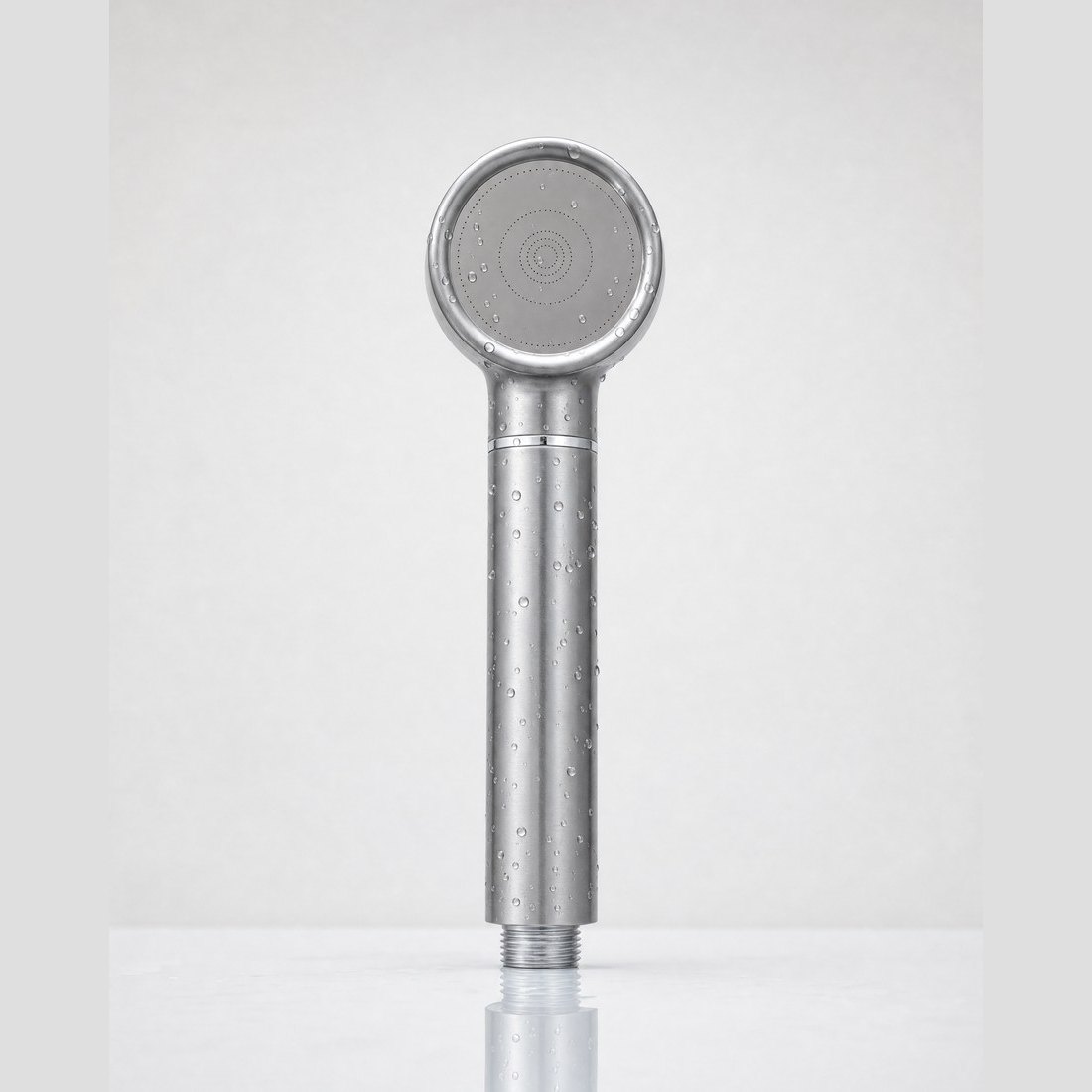
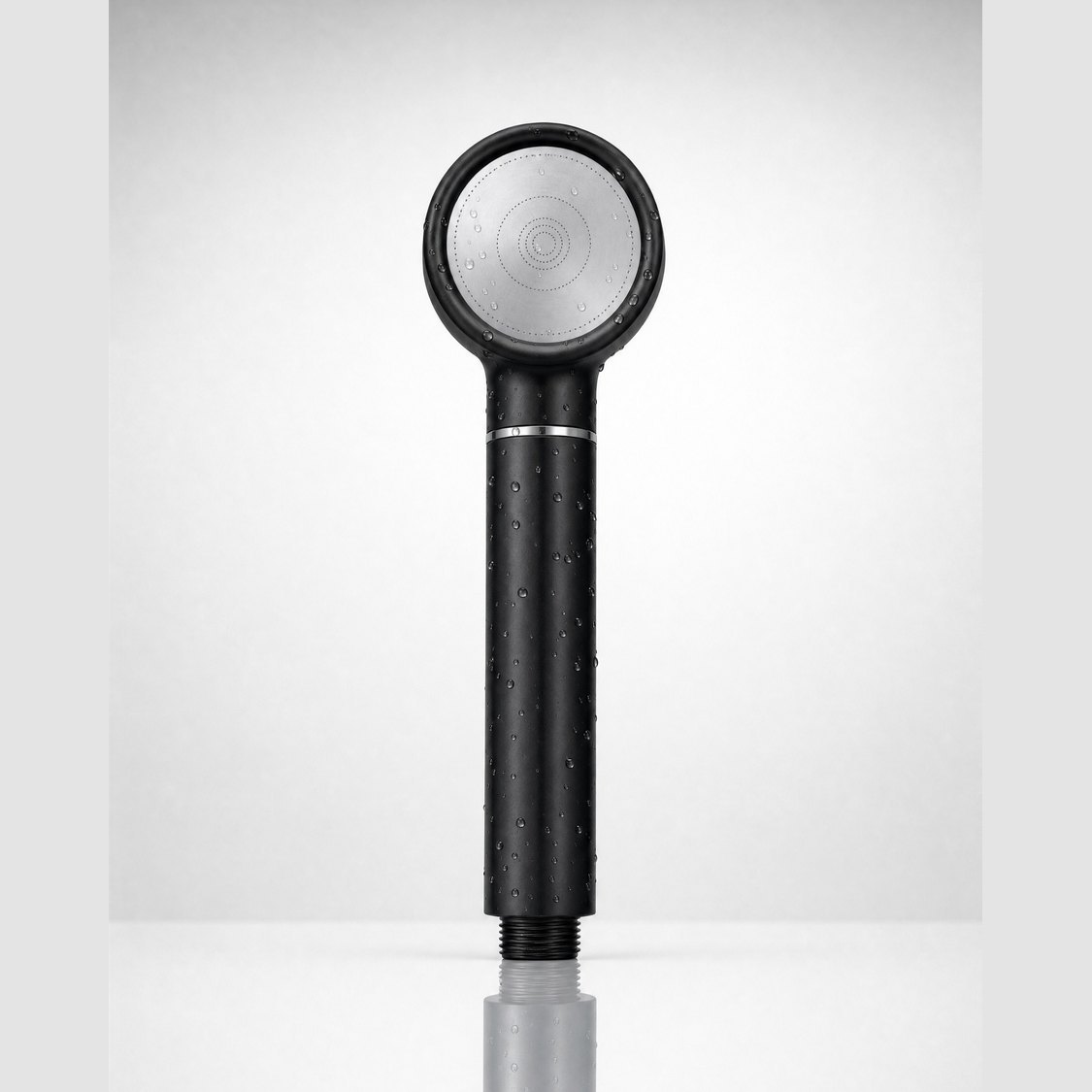


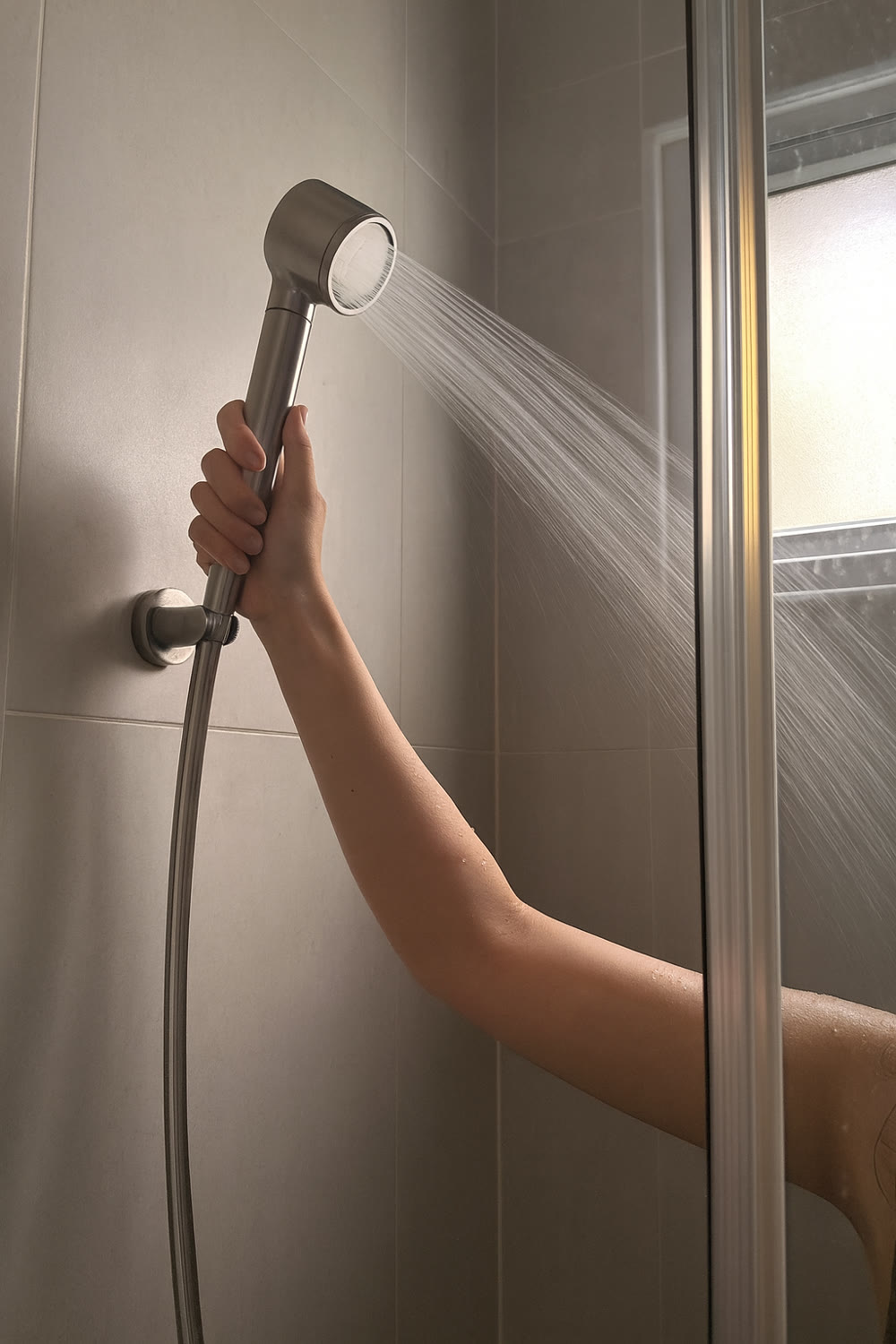
The one I use: Halo
I compared the filtered showerheads available in Singapore against those criteria in a separate guide, and the Halo Filtered Showerhead is the one I recommend and use at home. It pairs KDF-55 and calcium sulfite in the head with an ultrafine PP cotton stage in the handle at 1 micron, removes 99.9% of chlorine and chloramine along with heavy metals, exceeds NSF-177 standards, fits standard Singapore hose fittings in about five minutes, and sends fresh filters automatically every 60 days at S$39 on subscription.
It is S$125, less with code RELAX15, with a 30-day money-back guarantee, so trying it costs you nothing but the effort of installing it. It removes a daily oxidant from a barrier that is already under pressure from your treatment. It is not a substitute for that treatment, and severe or scarring acne needs a dermatologist rather than a showerhead.
Check Halo Availability →The Routine I Give My Acne Patients
Pin this next to your bathroom mirror
- Cleanse twice daily, not more. Low-pH, gentle, fingertips only. More washing does not mean less acne.
- Lukewarm water. Hot water strips a barrier that is already short on ceramides.
- Nothing abrasive. No scrubs, no brushes, no exfoliating cloths. You cannot buff away inflammation.
- Moisturise, even if you are oily. This is what makes your active treatment tolerable enough to keep using.
- Apply your treatment to the whole area, not as a spot treatment on individual pimples. You are preventing the next month's spots, not attacking today's.
- Sunscreen every morning. Non-negotiable if you have dark marks, because sun exposure deepens and prolongs them.
- Do not pick. The spot lasts a week or two. The mark your fingers create lasts a year or more.
Give it twelve weeks before you decide it isn't working
The single most common reason I see acne treatment fail is that it was abandoned at week three. Almost everything we use takes eight to twelve weeks to show its real effect, and the first few weeks often look worse rather than better because of irritation.
On that point, a correction worth making: what people call "purging" is, in the documented literature, retinoid irritation, dryness, redness, flaking and stinging, rather than a proven surge in new spots10. That distinction is useful because it changes the fix. Irritation is managed by using less, less often, with more moisturiser, and building up. It is not something you have to grimly endure at full strength.
For hormonal treatment in women, the timeline is even longer. In a large randomised trial of spironolactone, the difference between treatment and placebo at 12 weeks was modest, and by 24 weeks it was substantially larger20. Judging that treatment at three months would have meant stopping something that was working.
When To See A Dermatologist
- Deep, painful lumps or cysts. Singapore's guideline recommends referral for severe nodulocystic or conglobate acne10, and these carry the highest scarring risk.
- Any sign of true scarring, meaning indentations or raised areas rather than flat marks. Scars cannot be reversed once formed, so this is a treat-now signal, not a wait-and-see one.
- No meaningful improvement after a proper trial of a topical retinoid plus benzoyl peroxide, or after six to eight weeks of oral antibiotics combined with topicals10.
- Sudden or severe onset in an adult, particularly with irregular periods, excess hair growth or hair thinning, which warrants assessment for a hormonal cause10.
- It is affecting your mood, confidence, or how you live. This is a legitimate medical reason to escalate treatment, not vanity.
- You have been on antibiotics for months. That needs review regardless of how well it is working.
Frequently Asked Questions
No, and nobody should tell you otherwise. What it does is remove a daily oxidising irritant from skin that is already low on ceramides and being stripped further by benzoyl peroxide or a retinoid. In practice the thing that decides whether acne treatment succeeds is whether you can tolerate it for twelve weeks, and barrier irritation is the commonest reason people quit. It also matters for chest, shoulder and back acne, which is genuinely shower-facing. Acne that is scarring you still needs a doctor.
Two separate things are true. The hard-water pitch does not apply here: our water is soft at 42.7 mg/L, so a softener would be wasted money. But it does carry an average 2.27 mg/L total chlorine, mostly as chloramine, which is about ten times the combined chlorine a well-run swimming pool should have, and it is alkaline at pH 8.0, which lifts your skin's surface pH for a few hours after washing. So the disinfectant and the pH are the real variables, not the minerals. Switching to a low-pH cleanser addresses the second one and costs very little.
Yes. Flat brown marks are not scars, and Singapore's own scar grading system classifies them as grade 0 for exactly that reason. They are slow, often a year or more, and 22% of Asian patients in one study had them for five years or longer. Sunscreen every day, treat the acne early so the inflammation is shorter, and do not pick. Indented or raised scars are a different matter and do need professional treatment.
Diet plays some role for some people, but far less than the internet claims, and I see real harm from restrictive eating undertaken in the hope of clear skin. Before changing your diet, get the basics right: a retinoid, benzoyl peroxide, a gentle low-pH cleanser, sunscreen, and twelve weeks of consistency. If you want to test a specific food, test one, properly, for a couple of months.
Because adult-onset acne is common and normal. At the National Skin Centre roughly 30% of acne patients are 25 or over, about 69% of them women, and around 60% of them developed acne after their teens rather than carrying it through. It also behaves differently, with more deep cystic lesions and fewer blackheads. It is a recognised pattern with recognised treatments, several of them hormonal.
No. Twice a day is right, and a systematic review found the evidence for washing more is simply not there. Heat does deliver more oil to your skin surface, which is why your face feels greasy by mid-afternoon, but stripping it repeatedly damages a barrier that is already weakened. Blotting paper is a better answer than a third wash.
References
- Tan HH, Tan AW, Barkham T, Yan XY, Zhu M. Community-based study of acne vulgaris in adolescents in Singapore. Br J Dermatol. 2007;157(3):547-551. pubmed.ncbi.nlm.nih.gov
- Han XD, Oon HH, Goh CL. Epidemiology of post-adolescence acne and adolescence acne in Singapore: a 10-year retrospective and comparative study. J Eur Acad Dermatol Venereol. 2016;30(10):1790-1793. pubmed.ncbi.nlm.nih.gov
- Del Rosso JQ, Kircik L. The primary role of sebum in the pathophysiology of acne vulgaris and its therapeutic relevance in acne management. J Dermatolog Treat. 2024;35(1):2296855. pubmed.ncbi.nlm.nih.gov
- Jeremy AH, Holland DB, Roberts SG, Thomson KF, Cunliffe WJ. Inflammatory events are involved in acne lesion initiation. J Invest Dermatol. 2003;121(1):20-27. pubmed.ncbi.nlm.nih.gov
- Yamamoto A, Takenouchi K, Ito M. Impaired water barrier function in acne vulgaris. Arch Dermatol Res. 1995;287(2):214-218. pubmed.ncbi.nlm.nih.gov
- Cunliffe WJ, Burton JL, Shuster S. The effect of local temperature variations on the sebum excretion rate. Br J Dermatol. 1970;83(6):650-654. pubmed.ncbi.nlm.nih.gov
- Narang I, Sardana K, Bajpai R, Garg VK. Seasonal aggravation of acne in summers and the effect of temperature and humidity in a study in a tropical setting. J Cosmet Dermatol. 2019;18(4):1098-1104. pubmed.ncbi.nlm.nih.gov
- Basler RS. Acne mechanica in athletes. Cutis. 1992;50(2):125-128. pubmed.ncbi.nlm.nih.gov
- Lujia C, Hanlong Z, Hui S, et al. Mask-related adverse skin reactions in orientals during COVID-19. J Cosmet Dermatol. 2023;22(2):370-377. pubmed.ncbi.nlm.nih.gov
- Acne Management Guidelines by the Dermatological Society of Singapore. J Clin Aesthet Dermatol. 2019;12(7):34-50. pubmed.ncbi.nlm.nih.gov
- Abad-Casintahan F, Chow SK, Goh CL, et al. Frequency and characteristics of acne-related post-inflammatory hyperpigmentation. J Dermatol. 2016;43(7):826-828. pubmed.ncbi.nlm.nih.gov
- Taylor S, Elbuluk N, Grimes P, et al. Treatment recommendations for acne-associated hyperpigmentation: Results of the Delphi consensus process and a literature review. J Am Acad Dermatol. 2023;89(2):316-323. pubmed.ncbi.nlm.nih.gov
- PUB, Singapore's National Water Agency. Singapore Drinking Water Quality, January to December 2025. Total hardness (as CaCO3) average 42.7 mg/L; pH average 8.0. pub.gov.sg
- Danby SG, Brown K, Wigley AM, et al. The Effect of Water Hardness on Surfactant Deposition after Washing and Subsequent Skin Irritation in Atopic Dermatitis Patients and Healthy Control Subjects. J Invest Dermatol. 2018;138(1):68-77. pubmed.ncbi.nlm.nih.gov
- Lambers H, Piessens S, Bloem A, Pronk H, Finkel P. Natural skin surface pH is on average below 5, which is beneficial for its resident flora. Int J Cosmet Sci. 2006;28(5):359-370. pubmed.ncbi.nlm.nih.gov
- Schmid-Wendtner MH, Korting HC. The pH of the skin surface and its impact on the barrier function. Skin Pharmacol Physiol. 2006;19(6):296-302. pubmed.ncbi.nlm.nih.gov
- Walsh TR, Efthimiou J, Dréno B. Systematic review of antibiotic resistance in acne: an increasing topical and oral threat. Lancet Infect Dis. 2016;16(3):e23-e33. pubmed.ncbi.nlm.nih.gov
- Stringer T, Nagler A, Orlow SJ, Oza VS. Clinical evidence for washing and cleansers in acne vulgaris: a systematic review. J Dermatolog Treat. 2018;29(7):688-693. pubmed.ncbi.nlm.nih.gov
- Nisagornsen P, et al. Comparative efficacy and skin barrier effects of topical dapsone and benzoyl peroxide in acne vulgaris. Int J Womens Dermatol. 2026;12(2):e266. pubmed.ncbi.nlm.nih.gov
- Santer M, Lawrence M, Renz S, et al. Effectiveness of spironolactone for women with acne vulgaris (SAFA) in England and Wales: pragmatic, multicentre, phase 3, double blind, randomised controlled trial. BMJ. 2023;381:e074349. pubmed.ncbi.nlm.nih.gov
- Paciência I, Rodolfo A, Leão L, et al. Effects of Exercise on the Skin Epithelial Barrier of Young Elite Athletes: Swimming Comparatively to Non-Water Sports Training Session. Int J Environ Res Public Health. 2021;18(2):653. pubmed.ncbi.nlm.nih.gov