A Dermatologist's Guide To Hair Loss And Shedding
Why what's in the drain today is telling you about three months ago, how to tell breakage from real shedding, the warning signs that need seeing this week, what actually works, and a frank answer about your shower water.

I've practised dermatology for over 20 years. Of everything I see, hair loss causes the most distress relative to how much of it is treatable, and it is also where patients are sold the most nonsense. So this guide spends its first half on working out what you actually have, because the treatments for the different types have almost nothing in common, and one group of them is a genuine race against the clock.
First: Is This Normal?
Dermatologists generally take 50 to 100 hairs a day as the normal range for shedding1. That is a clinical convention rather than a figure from a large study, and it is worth knowing that it varies with how often you wash. If you wash twice a week, you will collect several days of shed hair in one wash and it will look alarming. That is arithmetic, not disease.
At any moment, roughly 85% of your hair is actively growing and about 15% is resting2. A growing hair keeps going for years. A resting hair sits dormant for around three to four months and is then pushed out when the new hair beneath it starts to grow.
The Three-Month Delay That Explains Everything
This is the single most useful thing in this guide, and almost nobody knows it.
When something significant happens to your body, a severe illness or high fever, major surgery, childbirth, a crash diet, a serious emotional shock, up to 70% of your growing hairs can be pushed into the resting phase at once2. But they do not fall out then. They sit there, dormant, for about three months. Only when the new hairs start pushing through are all those club hairs extruded together, which is why the shedding arrives as a sudden frightening wave.
So the hair in your drain today is reporting on what happened to you roughly three months ago. This is called telogen effluvium, and it is the commonest cause of sudden diffuse shedding.
Two consequences follow. First, when you hunt for a cause, look at the three months before the shedding started, not the week it began. Second, and I say this gently: this is why so many hair products appear to work. Acute telogen effluvium is self-limiting and settles on its own, usually within six months. Whatever you started taking when the shedding peaked will get the credit for a recovery that was already on its way.
Breakage Or Shedding? Check The End Of The Hair
Before anything else, work out which of these you have, because they have entirely different causes and entirely different solutions. You can do this yourself, right now, with a hair from your bathroom floor and reasonable light.
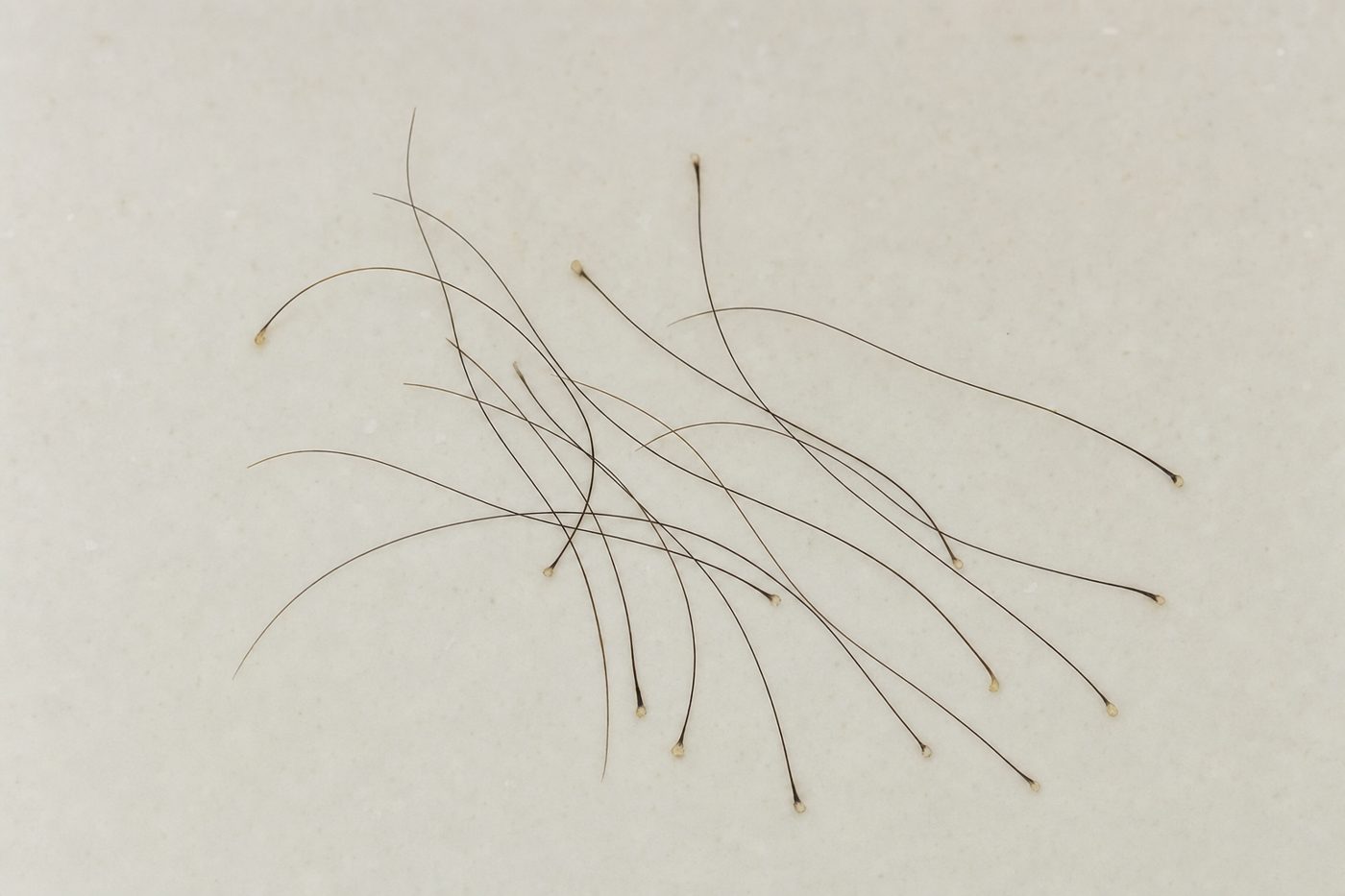
If you are finding full-length hairs with a small white bulb, those came out of the follicle. That is genuine shedding, and the rest of this guide applies.
If you are finding shorter fragments of varying lengths with blunt ends and no bulb, your hair is snapping partway along the shaft. Your follicles are working; the fibre they produced is being damaged after it leaves your head. That is a hair care problem, not a hair loss problem, and it is caused by heat styling, bleaching and colouring, tight styles, aggressive brushing, and chemical or physical wear. It also, confusingly, looks exactly like thinning, because breakage reduces volume and creates a halo of short pieces.
Hold onto that distinction. It is the key to the water question later.
What Kind Of Hair Loss Is It?
Pattern hair loss is gradual and patterned: receding temples and a thinning crown in men, a widening central parting with a preserved front hairline in women. Follicles shrink over years, producing progressively finer, shorter hairs rather than falling out at once. It is somewhat less common in Asian populations: a study of over 15,000 people across six Chinese cities found it in 21.3% of men and 6.0% of women, rising steadily with age3, with similar Korean figures4.
Telogen effluvium is the sudden diffuse shedding described above: all over, no bald patches, and it settles on its own.
Alopecia areata produces discrete round or oval smooth patches, sometimes with fine nail pitting. At Singapore's National Skin Centre it accounted for 3.8% of new referrals, median age 255.
Traction alopecia comes from tight ponytails, braids and extensions, and shows at the margins where the pull is greatest. Reversible early, permanent if the styling continues6.
Scarring alopecias cannot wait, and they get their own section below.
The red flags: please do not wait on these
In scarring alopecia the follicle is destroyed and replaced with scar tissue. Hair that is gone is gone permanently, and treatment aims to stop further loss. Every month of delay is follicles you do not get back. See a dermatologist promptly if you have:
- Pain, burning, tenderness or persistent itch in the areas where you are losing hair. Hair loss that hurts is the classic warning sign.
- Smooth, shiny skin with no visible pores where the hair used to be. If you cannot see the tiny openings the hairs came out of, the follicles have gone.
- A receding hairline in a woman, especially with thinning eyebrows. In a study of 56 Asian patients with frontal fibrosing alopecia, 100% had hairline recession and 87.5% had eyebrow loss, at an average age of onset of 517. Eyebrow loss often comes first and is routinely mistaken for over-plucking.
- Redness or scale around individual hairs, or a single surviving hair standing alone in an otherwise bare band.
- Sudden patchy loss, or loss of eyebrows or eyelashes in any pattern.
- Shedding still going strong after six months. Acute telogen effluvium is self-limiting; beyond six months something else is happening.
Pattern hair loss is not an emergency but it is progressive, and treatments preserve far better than they restore. Earlier is meaningfully better.
About Your Bloods, And About Iron
Iron is where I most often see patients given false confidence. The best controlled study compared 381 women with pattern hair loss or chronic shedding against 76 controls. At a ferritin threshold of 15, iron deficiency was found in 12.4% of the pattern hair loss group, 12.1% of the shedding group, and 29.8% of the controls8. The women without hair loss were more iron deficient. And the widely quoted rule that ferritin must exceed 70 comes from a 2002 paper whose own author wrote that the right level "is yet to be definitively established"9.
So checking iron is reasonable, because deficiency is common and correcting it is cheap and safe, but do not let a borderline ferritin become the whole explanation. Thyroid testing is worth doing if you have suggestive symptoms such as fatigue, cold intolerance or weight change2. Broad hair-loss panels and heavy metal screens are not useful. One genuine safety point: iron deficiency in a man or a post-menopausal woman needs its cause investigated rather than just supplemented, because the commonest cause is bleeding somewhere.
Where Chlorine Genuinely Comes In
Now that you have done the club-root check, this is where water actually matters, and it matters more than most people realise, because breakage is the great impersonator of hair loss.
Chlorine attacks the hair fibre directly, and this is well documented. Your hair's outer cuticle is sealed by a covalently bound lipid layer, and laboratory work shows chlorine solutions strip exactly that layer away27. Once the seal is gone, the fibre roughens, loses moisture, tangles, and snaps. The most striking demonstration comes from 67 members of the Japanese national swimming team: 61% had visible hair discolouration against none of the 54 controls, with cuticle loss on electron microscopy and measurably reduced sulfur, the chemical signature of broken keratin bonds10. The authors found that hypochlorous acid had penetrated all the way into the hair cortex.
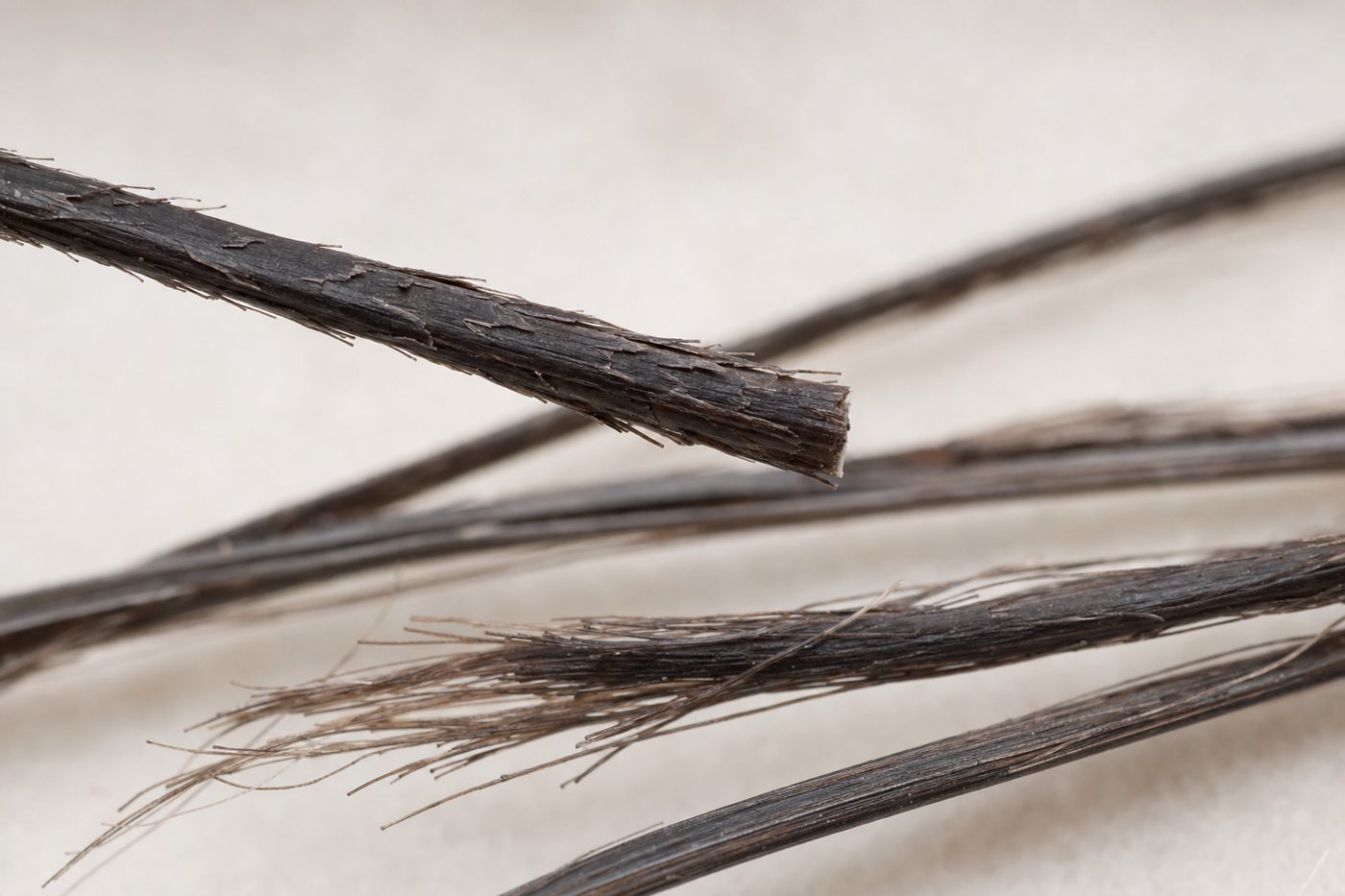
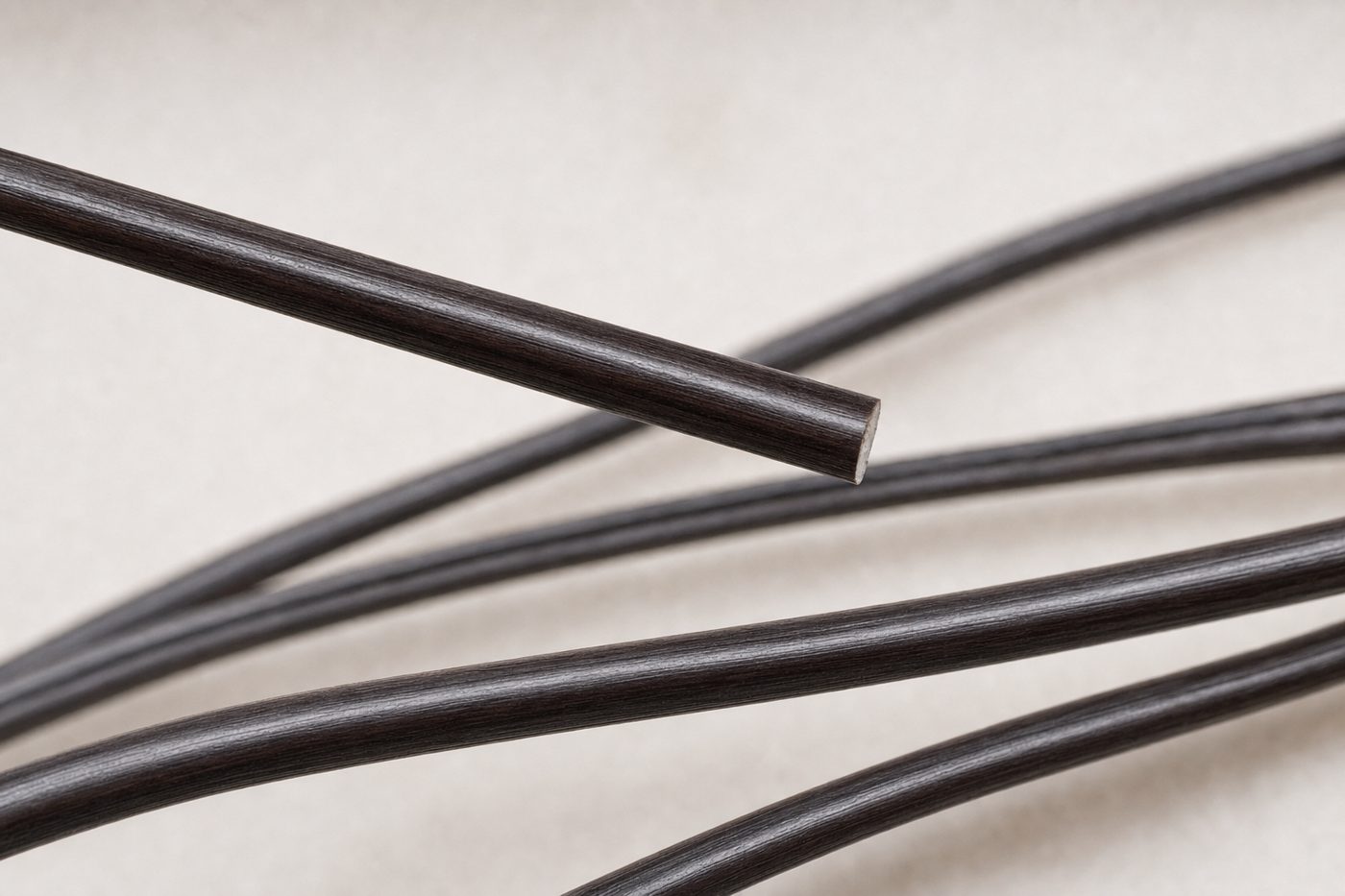
Singapore's tap water carries an average 2.27 mg/L total chlorine, of which 2.10 mg/L is monochloramine13, the more persistent form. That is roughly ten times the combined chlorine WHO says a well-managed swimming pool should stay below. You are not training in a pool for hours a day, and I want to be straight that the exposure gap between a national swimmer and a five-minute shower is enormous. But you are wetting your hair in a chlorinated oxidising solution several times a week, for years, and the damage to a hair fibre is cumulative because the fibre is dead and cannot repair itself. Every millimetre of hair on your head has been through every wash since it emerged.
The important distinction: breakage, not follicles
No study shows that chlorine causes hair loss at the level of the follicle, and the anatomy explains why: your hair shaft is dead keratin, while the follicle sits millimetres below the scalp, governed by hormones and blood supply. In the swimmer study, when researchers tested the follicles' manufacturing function, it was completely normal.
But do not skip past what that means. The factory was fine and the product was still being wrecked. Damaged, snapping hair looks exactly like thinning: less volume, more strands in the drain, a halo of short broken pieces around your parting. Protecting the fibre will not treat pattern hair loss or telogen effluvium. It will stop you losing length and density to a cause that has nothing to do with your follicles, and that is worth having whether or not you also have a follicular problem.
One further detail from that study, because it changes the advice. The authors concluded the cuticle damage came substantially from friction with water, with chlorine then reaching the cortex once the cuticle was breached. Mechanical wear opens the door; the chemistry walks through it. So handling your hair gently and reducing what it is rinsed in are the same project. The chlorine damage itself is well documented; what nobody has run is a trial comparing showering with and without it.
One related correction. In the one study that examined mineral deposits on hair from hard water, calcium showed no significant difference and there were no significant structural surface changes under electron microscopy12. The "calcium building up on your scalp and blocking follicles" story has no evidence behind it. Singapore's water is soft in any case, averaging 42.7 mg/L hardness13.
The hard-water pitch, meanwhile, does not apply in Singapore at all. PUB's report gives an average hardness of 42.7 mg/L13, which is soft, against 76 to over 350 mg/L in the studies of hard water and skin. A softener here would be money wasted, and the "calcium building up on your scalp" story has no evidence behind it either: the one study that measured mineral deposits on hair found no significant calcium difference and no structural change12. The chlorine is the part of our water worth removing; the minerals are not.
So the case for a filter is breakage, and breakage is not a small category. It is what the chlorine evidence directly supports, and it is the single most common reason people believe they are losing hair when their follicles are working perfectly well. If your self-check turned up blunt-ended fragments, the condition of your fibre is your problem, and removing chlorine sits alongside less heat, less bleach and looser styles as the way to fix it. If you found club roots, you have a follicular issue that needs proper assessment, and a showerhead will not substitute for that, though it will still protect the hair you keep.
There is one genuine scalp-level link worth knowing. In a study of 150 men with shedding associated with dandruff, six months of antifungal shampoo reduced shedding by 10 to 17% and increased the proportion of hairs in the growing phase, though hair density did not change15. So an inflamed, flaking scalp does contribute modestly to shedding, and treating it helps a little. If that describes you, my dandruff guide is the more relevant one.
What Actually Works, Ranked Honestly

Topical minoxidil, the best-evidenced starting point
In 393 men over 48 weeks, 5% minoxidil beat both 2% and placebo, and worked faster16. In 381 women, 5% beat placebo on all three primary measures17. Expect an increase in shedding in the first few weeks: minoxidil pushes resting hairs out to make room for new growth, so the shed is a sign it is working. It is expected, self-limiting, and the commonest reason people quit a treatment that was about to help them. Give it at least six months.
Finasteride and dutasteride, for men
In 414 Japanese men, 48 weeks of finasteride 1 mg improved hair in 58% versus 6% on placebo18, and dutasteride beat placebo on hair count in Korean men19. On the side effects people worry about, pooled data from 15 placebo-controlled trials found a genuine increase in sexual dysfunction, relative risk 1.66 for finasteride20, with underlying rates in low single-digit percentages. Worth discussing properly with a doctor rather than dismissing or catastrophising.
Low-dose oral minoxidil
A safety study of 1,404 patients found the commonest side effect was unwanted hair growth elsewhere at 15.1%, causing only 0.5% to stop, with systemic effects uncommon and overall discontinuation for side effects at 1.7%21. Prescription-only and needs supervision, but now a mainstream option.
Anti-androgens for women, and procedures
Spironolactone is widely used for female pattern hair loss, though the most-cited study is an open trial without a placebo group22. Platelet-rich plasma increased hair density versus placebo across nine trials, but hair count and diameter were not significantly better23. Microneedling works as an add-on rather than alone, on low-quality trials24.
Stop damaging what you have grown
Where water fitsNone of the treatments above stop your hair snapping off. Reducing heat styling, bleaching, tight styles and mechanical wear preserves the length and volume you already have, and this is the one part of the plan you control entirely and immediately. A gentler wash belongs in this category, and only this category. It is about fibre condition, not follicles.
What is oversold
Biotin. In every published case where it helped, the patient had an underlying condition causing a deficiency. There is no good evidence for supplementing it otherwise25, and it interferes with common thyroid and cardiac blood tests.
Rosemary oil. One trial is cited constantly. It compared rosemary oil against 2% minoxidil rather than the 5% standard, had no placebo group at all, found no difference between arms, and found scalp itching rose significantly in both26. Given that shedding episodes improve on their own, "no worse than a weak comparator" is not evidence of anything. Never replicated.
General supplements. There is no evidence low zinc causes hair loss, and excessive supplement intake can itself cause hair loss9. More is not better.
What To Look For In A Shower Filter (And What I Use)
This is a fibre-protection measure rather than a hair-loss treatment, and the case for it is strongest if you swim, if your hair is bleached, coloured or chemically treated, or if your self-check turned up broken fragments. If you are shedding club-rooted hairs, get that assessed properly as well. Four things matter:
- De-chlorination that works in hot water. Many media perform well cold and poorly at shower temperatures. Calcium sulfite performs best hot. And because most of Singapore's residual is chloramine rather than free chlorine, the filter needs a KDF-55 stage as well, which is the medium that reduces chloramine.
- A physical filtration stage for sediment, rust and particulates from older pipes.
- It must fit a Singapore bathroom, which almost always means a handheld shower on a standard hose fitting.
- Maintenance you will actually keep up with. An expired filter is an ornament.
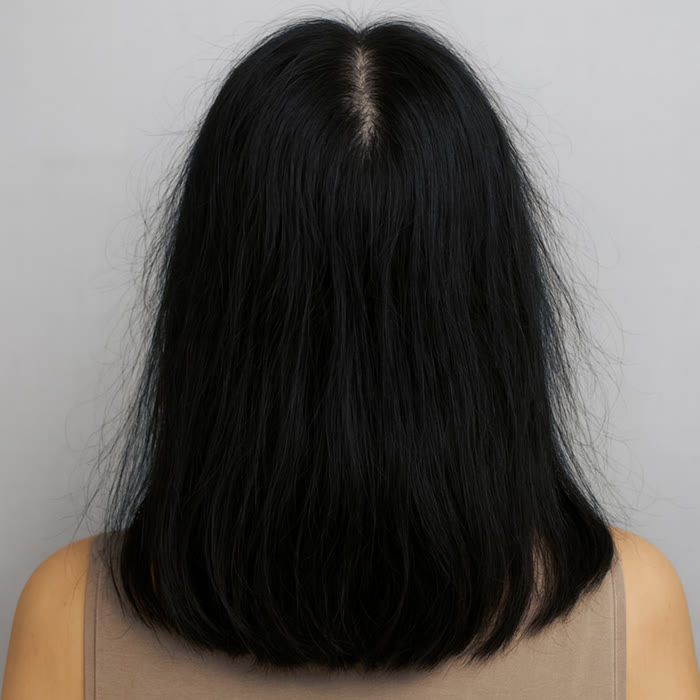


Figures on the left are from Halo's own four-week volunteer consumer study, in which 88% reported less dryness and breakage. A brand study is not a clinical trial and I weigh it accordingly, but note that what it reports, breakage and condition, is exactly what the independent literature supports, rather than any claim about hair loss.
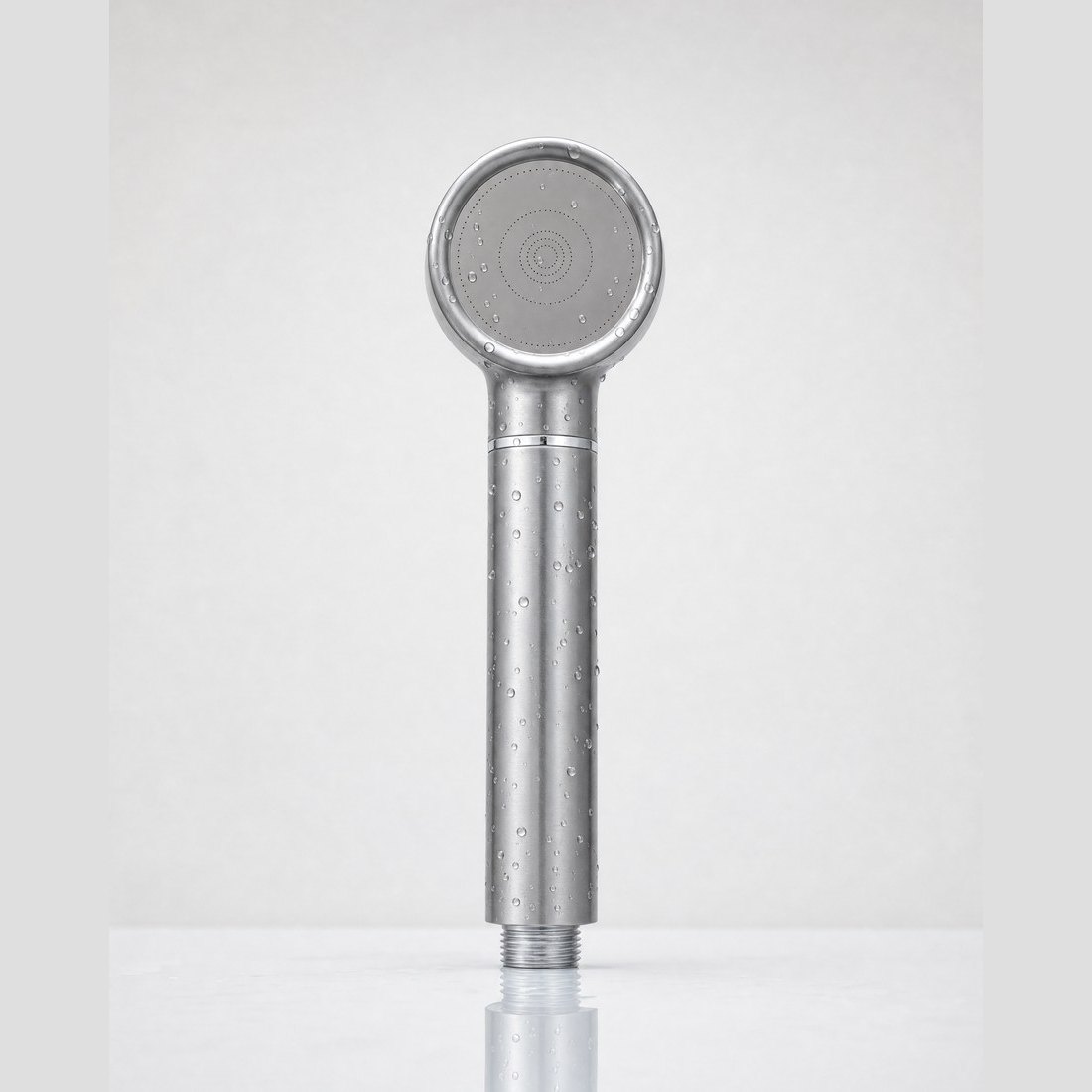
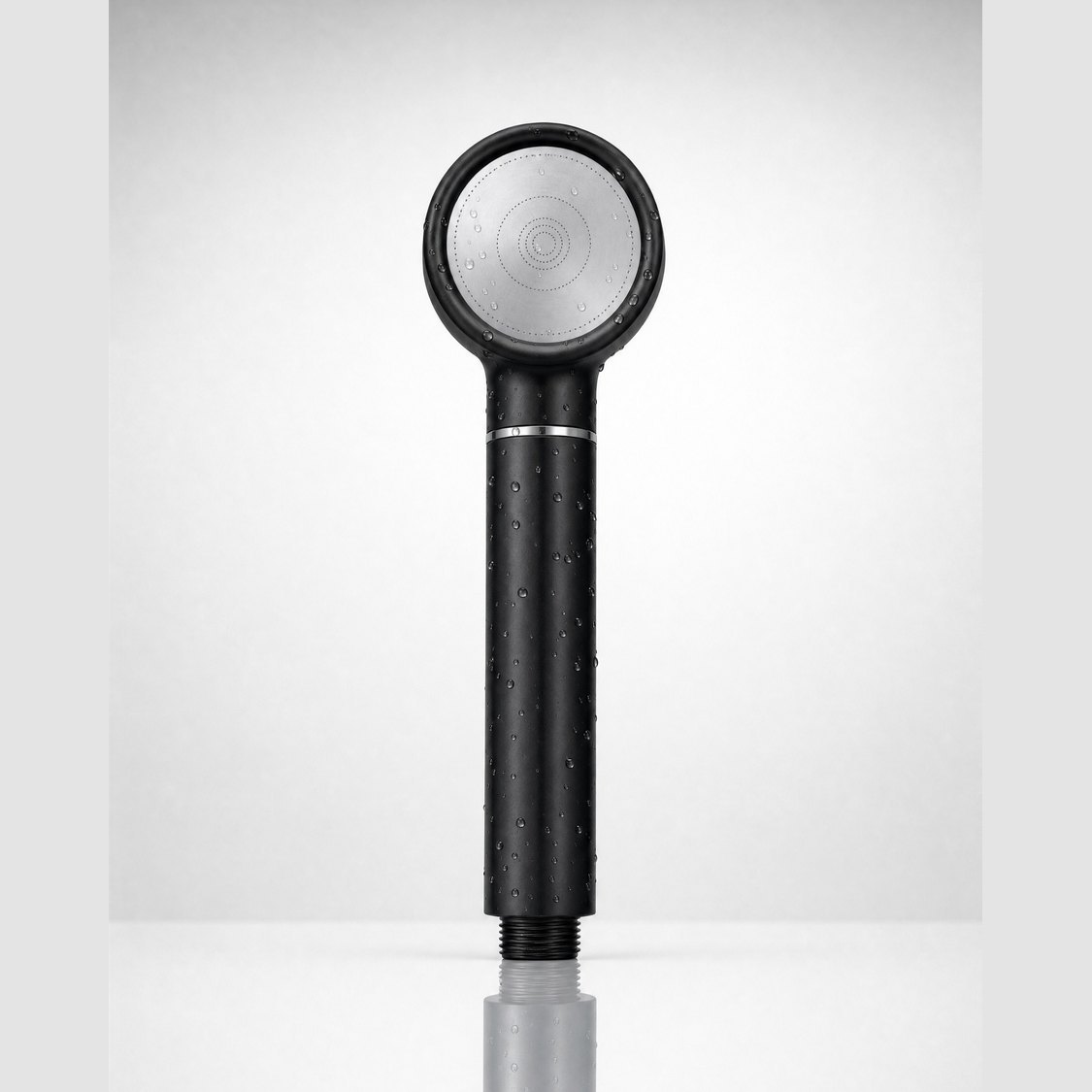


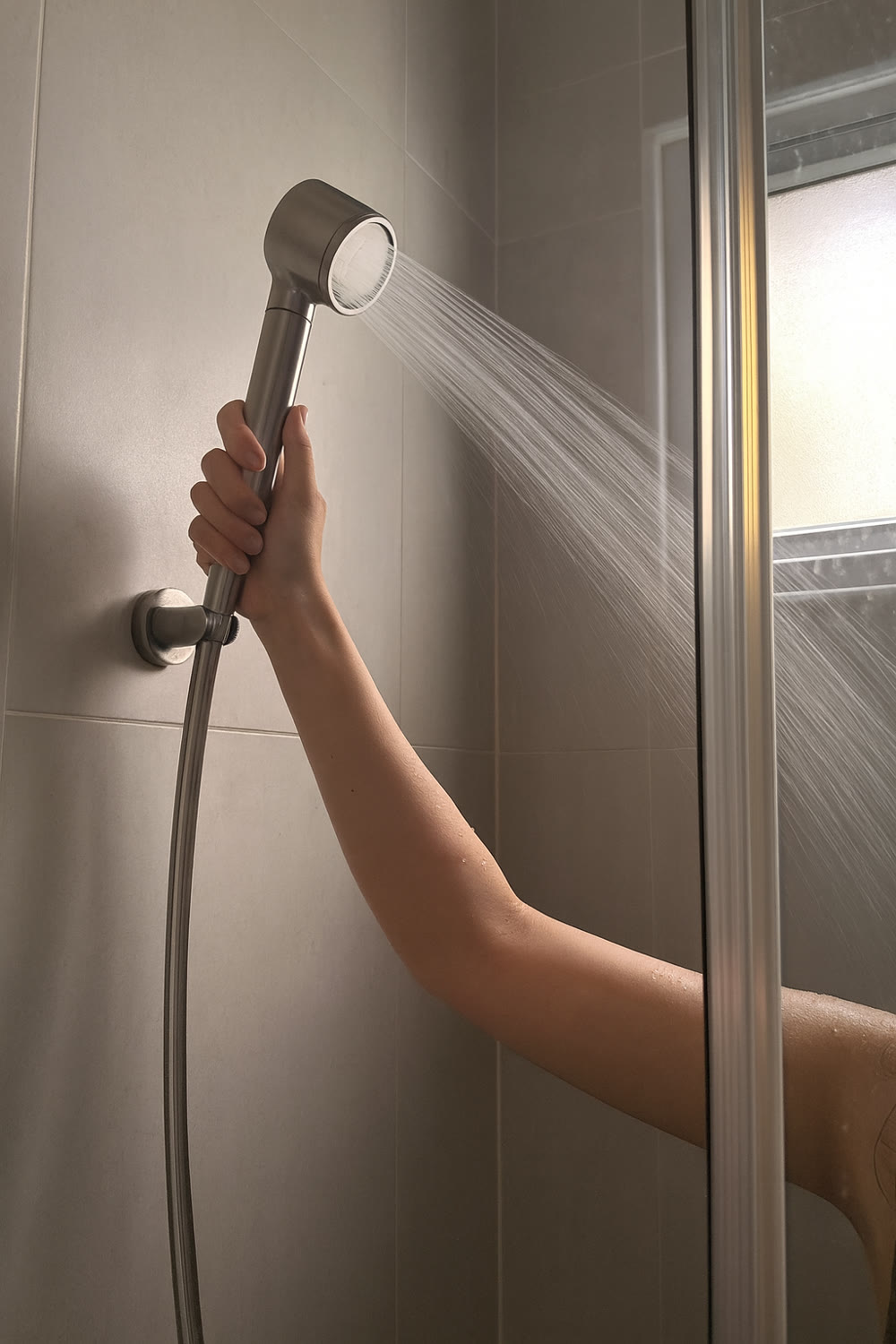
The one I use: Halo
I compared the filtered showerheads available in Singapore against those criteria in a separate guide, and the Halo Filtered Showerhead is the one I recommend and use at home. It pairs KDF-55 and calcium sulfite in the head with an ultrafine PP cotton stage in the handle at 1 micron, removes 99.9% of chlorine and chloramine along with heavy metals, exceeds NSF-177 standards, fits standard Singapore hose fittings in about five minutes, and sends fresh filters automatically every 60 days at S$39 on subscription.
It is S$125, less with code RELAX15, with a 30-day money-back guarantee, so the trial risk sits with the company rather than you. Buy it to protect the hair you have from breakage. It is not a hair-loss treatment, and it should not delay getting a proper diagnosis if you are shedding at the root.
Check Halo Availability →The Hair Routine I Give My Patients
Protecting what you have while treatment works
- Wash as often as you like. Washing does not cause hair loss. Avoiding washing simply collects several days of shedding into one alarming session.
- Lukewarm water, and be gentle at the scalp. Massage with fingertips, not nails.
- Condition the mid-lengths and ends every wash. This is your main defence against breakage.
- Detangle wet hair with a wide-tooth comb, from the ends upward. Never drag a brush from the roots down through a knot.
- Loosen your styles. If a ponytail or bun gives you a headache or tugs at your hairline, it is tight enough to cause traction alopecia over time.
- Cut the heat. Air dry when you can; use the lowest effective setting and a heat protectant when you cannot.
- Take a photo every month, same spot, same light, parted the same way. Hair changes too slowly to judge in a mirror, and this is the only way to know whether treatment is working.
Frequently Asked Questions
It will not change what your follicles are doing, and no study has shown otherwise, because water acts on the dead fibre rather than the living follicle beneath the scalp. What chlorine demonstrably does damage is the fibre itself: it strips the cuticle's bound lipid seal, and heavy exposure depletes the keratin's sulfur bonds outright. Since breakage produces exactly the thinning appearance people come to me about, removing chlorine protects real volume and length. It is a fibre measure, not a follicle one, and both can matter at once.
Check the ends of the hairs. If they have small white bulbs, think back to about three months ago: illness, fever, surgery, childbirth, a crash diet, a major stressor, a new medication. Acute telogen effluvium usually settles within six months on its own. If there is no identifiable trigger, if it continues past six months, or if you have any of the red flags above, get it assessed.
No, this is expected and it is a good sign. Minoxidil works partly by pushing resting hairs out so new growth can come through, so an initial increase in shedding is the mechanism working. It typically settles within a couple of months. Stopping at that point is the single commonest way people abandon a treatment just before it starts to pay off. Give it six months before judging.
Only if you have a proven deficiency. Biotin has no good evidence in people who are not deficient, and it interferes with common blood tests including thyroid and cardiac ones. Zinc has no established link to hair loss. And excessive supplement intake can itself cause hair loss. If you want to spend money usefully, spend it on a proper diagnosis first.
No. You shed the same number of hairs either way; washing less just means they accumulate and come out together, which feels much worse. If you have a flaking, itchy scalp, washing less will actively make that worse, and scalp inflammation does contribute modestly to shedding.
Singapore's water is soft, averaging 42.7 mg/L hardness in PUB's published figures, so this is largely a non-issue here. Even where water is genuinely hard, the studies conflict: two small ones found reduced fibre strength, another found no difference in strength or elasticity, and the electron microscopy study found no significant surface damage. It is a weak, contested effect on the fibre, and no effect at all on hair loss.
References
- American Academy of Dermatology. Do you have hair loss or hair shedding? aad.org (professional body patient guidance, not a primary study)
- Hughes EC, Syed HA, Saleh D. Telogen Effluvium. StatPearls. Treasure Island (FL): StatPearls Publishing; 2026. ncbi.nlm.nih.gov
- Wang TL, Zhou C, Shen YW, et al. Prevalence of androgenetic alopecia in China: a community-based study in six cities. Br J Dermatol. 2010;162(4):843-847. pubmed.ncbi.nlm.nih.gov
- Paik JH, Yoon JB, Sim WY, et al. The prevalence and types of androgenetic alopecia in Korean men and women. Br J Dermatol. 2001;145(1):95-99. pubmed.ncbi.nlm.nih.gov
- Tan E, Tay YK, Goh CL, et al. The pattern and profile of alopecia areata in Singapore: a study of 219 Asians. Int J Dermatol. 2002;41(11):748-753. pubmed.ncbi.nlm.nih.gov
- Billero V, Miteva M. Traction alopecia: the root of the problem. Clin Cosmet Investig Dermatol. 2018;11:149-159. pubmed.ncbi.nlm.nih.gov
- Suchonwanit P, Pakornphadungsit K, Leerunyakul K, et al. Frontal fibrosing alopecia in Asians: a retrospective clinical study. Int J Dermatol. 2020;59(2):184-190. pubmed.ncbi.nlm.nih.gov
- Olsen EA, Reed KB, Cacchio PB, et al. Iron deficiency in female pattern hair loss, chronic telogen effluvium, and control groups. J Am Acad Dermatol. 2010;63(6):991-999. pubmed.ncbi.nlm.nih.gov
- Rushton DH. Nutritional factors and hair loss. Clin Exp Dermatol. 2002;27(5):396-404. pubmed.ncbi.nlm.nih.gov
- Nanko H, Mutoh Y, Atsumi R, et al. Hair-discoloration of Japanese elite swimmers. J Dermatol. 2000;27(10):625-634. pubmed.ncbi.nlm.nih.gov
- Lomelí-Legaspi E, Corona-Rodarte E, Cano-Aguilar LE, et al. The Greening of Hair: A Unique Case of Chlorotrichosis and Its Management. Skin Appendage Disord. 2024;10(6):528-531. pubmed.ncbi.nlm.nih.gov
- Alahmmed LM, Alibrahim EA, Alkhars AF, et al. Scanning electron microscopy study of hair shaft changes related to hardness of water. Indian J Dermatol Venereol Leprol. 2017;83(6):740. pubmed.ncbi.nlm.nih.gov
- PUB, Singapore's National Water Agency. Singapore Drinking Water Quality, January to December 2025. Total hardness (as CaCO3) average 42.7 mg/L. pub.gov.sg
- Thomas KS, Koller K, Dean T, et al. A multicentre randomised controlled trial and economic evaluation of ion-exchange water softeners for the treatment of eczema in children (SWET). Health Technol Assess. 2011;15(8):1-156. pubmed.ncbi.nlm.nih.gov
- Piérard-Franchimont C, Goffin V, Henry F, et al. Nudging hair shedding by antidandruff shampoos. Int J Cosmet Sci. 2002;24(5):249-256. pubmed.ncbi.nlm.nih.gov
- Olsen EA, Dunlap FE, Funicella T, et al. A randomized clinical trial of 5% topical minoxidil versus 2% topical minoxidil and placebo in the treatment of androgenetic alopecia in men. J Am Acad Dermatol. 2002;47(3):377-385. pubmed.ncbi.nlm.nih.gov
- Lucky AW, Piacquadio DJ, Ditre CM, et al. A randomized, placebo-controlled trial of 5% and 2% topical minoxidil solutions in the treatment of female pattern hair loss. J Am Acad Dermatol. 2004;50(4):541-553. pubmed.ncbi.nlm.nih.gov
- Kawashima M, Hayashi N, Igarashi A, et al. Finasteride in the treatment of Japanese men with male pattern hair loss. Eur J Dermatol. 2004;14(4):247-254. pubmed.ncbi.nlm.nih.gov
- Eun HC, Kwon OS, Yeon JH, et al. Efficacy, safety, and tolerability of dutasteride 0.5 mg once daily in male patients with male pattern hair loss. J Am Acad Dermatol. 2010;63(2):252-258. pubmed.ncbi.nlm.nih.gov
- Lee S, Lee YB, Choe SJ, et al. Adverse Sexual Effects of Treatment with Finasteride or Dutasteride for Male Androgenetic Alopecia: A Systematic Review and Meta-analysis. Acta Derm Venereol. 2019;99(1):12-17. pubmed.ncbi.nlm.nih.gov
- Vañó-Galván S, Pirmez R, Hermosa-Gelbard A, et al. Safety of low-dose oral minoxidil for hair loss: A multicenter study of 1404 patients. J Am Acad Dermatol. 2021;84(6):1644-1651. pubmed.ncbi.nlm.nih.gov
- Sinclair R, Wewerinke M, Jolley D. Treatment of female pattern hair loss with oral antiandrogens. Br J Dermatol. 2005;152(3):466-473. pubmed.ncbi.nlm.nih.gov
- Zhang X, Ji Y, Zhou M, et al. Platelet-Rich Plasma for Androgenetic Alopecia: A Systematic Review and Meta-Analysis of Randomized Controlled Trials. J Cutan Med Surg. 2023;27(5):504-508. pubmed.ncbi.nlm.nih.gov
- English RS, Ruiz S, DoAmaral P. Microneedling and Its Use in Hair Loss Disorders: A Systematic Review. Dermatol Ther (Heidelb). 2022;12(1):41-60. pubmed.ncbi.nlm.nih.gov
- Patel DP, Swink SM, Castelo-Soccio L. A Review of the Use of Biotin for Hair Loss. Skin Appendage Disord. 2017;3(3):166-169. pubmed.ncbi.nlm.nih.gov
- Panahi Y, Taghizadeh M, Marzony ET, et al. Rosemary oil vs minoxidil 2% for the treatment of androgenetic alopecia: a randomized comparative trial. Skinmed. 2015;13(1):15-21. pubmed.ncbi.nlm.nih.gov
- Jones LN, Rivett DE. The role of 18-methyleicosanoic acid in the structure and formation of mammalian hair fibres. Micron. 1997;28(6):469-485. pubmed.ncbi.nlm.nih.gov